
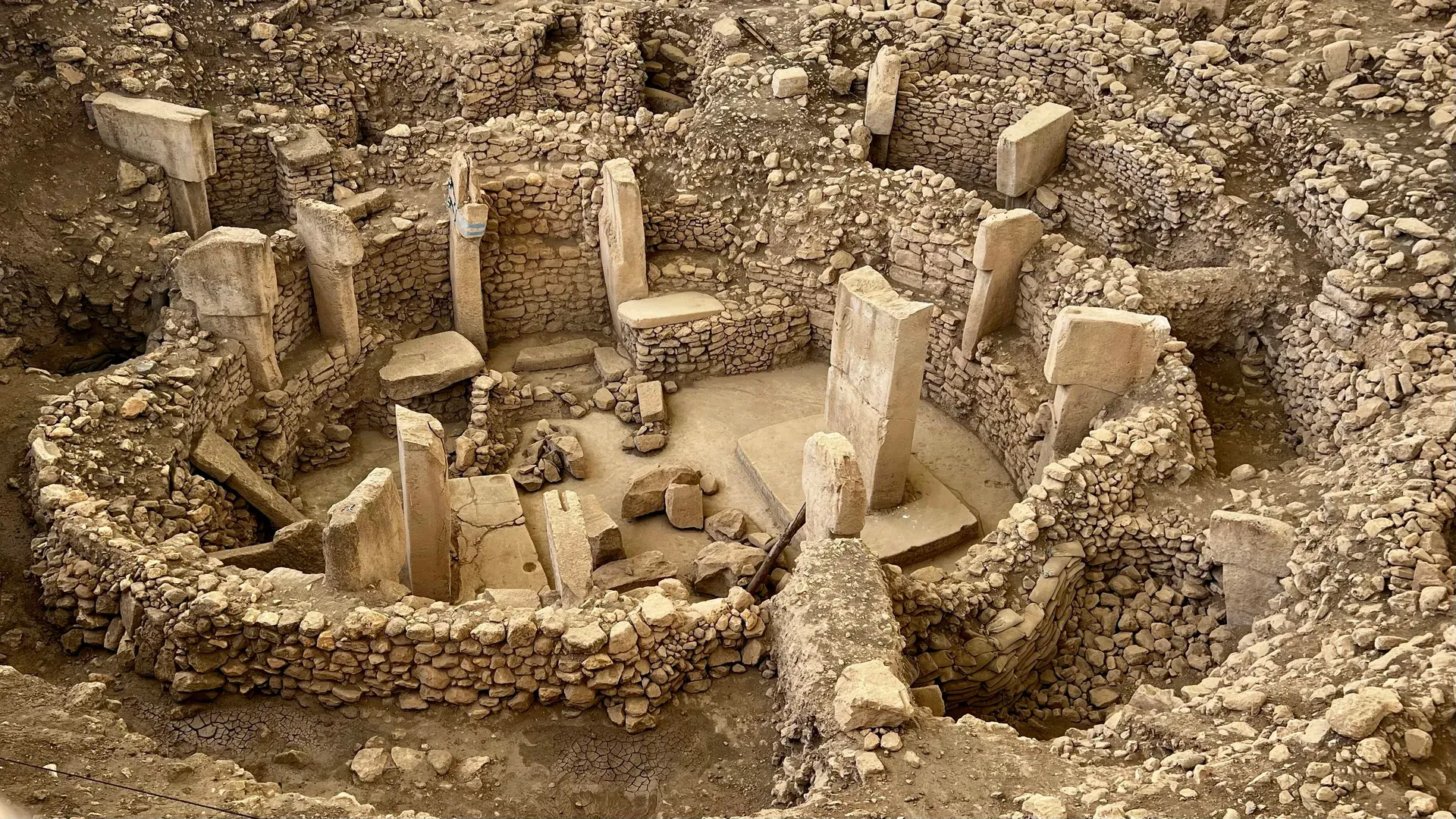
Göbekli Tepe is a Neolithic sanctuary on a limestone ridge 15 km northeast of Şanlıurfa, in southeastern Turkey, where hunter-gatherers raised carved stone pillars from about 9600 BCE. It is the world's oldest known monumental complex — roughly 6,000 years older than Stonehenge.
Göbekli Tepe is a Neolithic archaeological site on a limestone ridge 15 km northeast of Şanlıurfa, in southeastern Turkey, near the village of Örencik. Its monuments went up between about 9600 and 8200 BCE, which makes it the world's oldest known monumental temple complex. Stonehenge's first stones appeared around 3000 BCE. The Great Pyramid around 2560. Göbekli Tepe beats them by six to seven thousand years.
Hunter-gatherers built it, before farming or pottery reached the region. That single fact overturned a century of archaeological assumption: textbooks had put agriculture first and monumental building second, and Göbekli Tepe reversed the order. What stands on the hill today are round-oval and rectangular enclosures, 10–30 m across, each defined by T-shaped limestone pillars carved with foxes, wild boar, snakes, cranes and vultures. The tallest reach 5.5 m. UNESCO inscribed the site in 2018 under criteria (i), (ii) and (iv), citing it among the first manifestations of human-made monumental architecture anywhere.
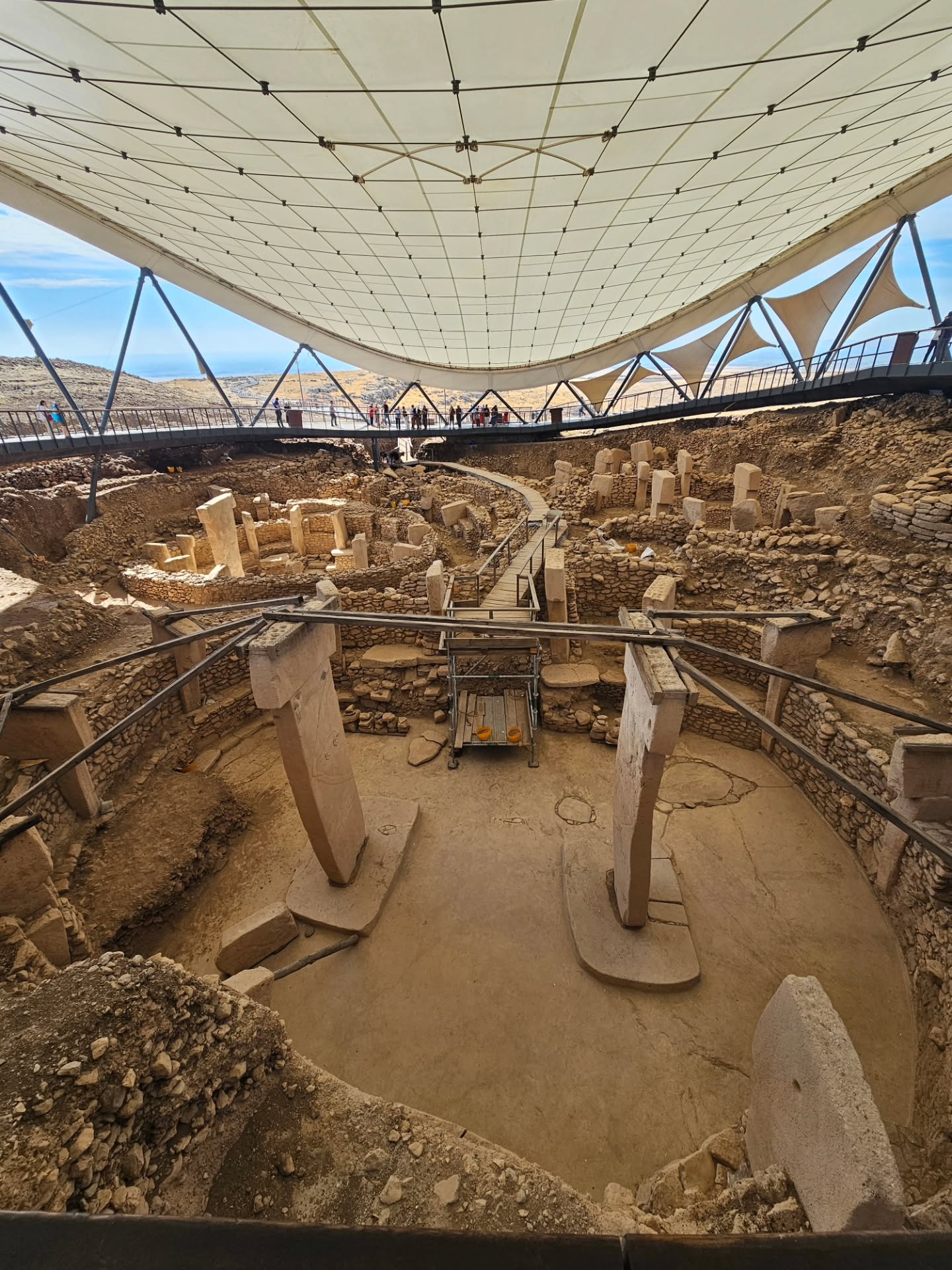
Visitors see it from elevated boardwalks beneath a protective canopy, looking down into the excavated enclosures the way archaeologists do. Allow 90 minutes minimum for the visitor centre's exhibits and animation hall plus the boardwalk loop; two to three hours with a guide. A free shuttle covers the 1 km between the visitor centre and the mound. One more thing worth knowing before you go: only about 5–10% of the mound has been excavated. Most of Göbekli Tepe is still underground.
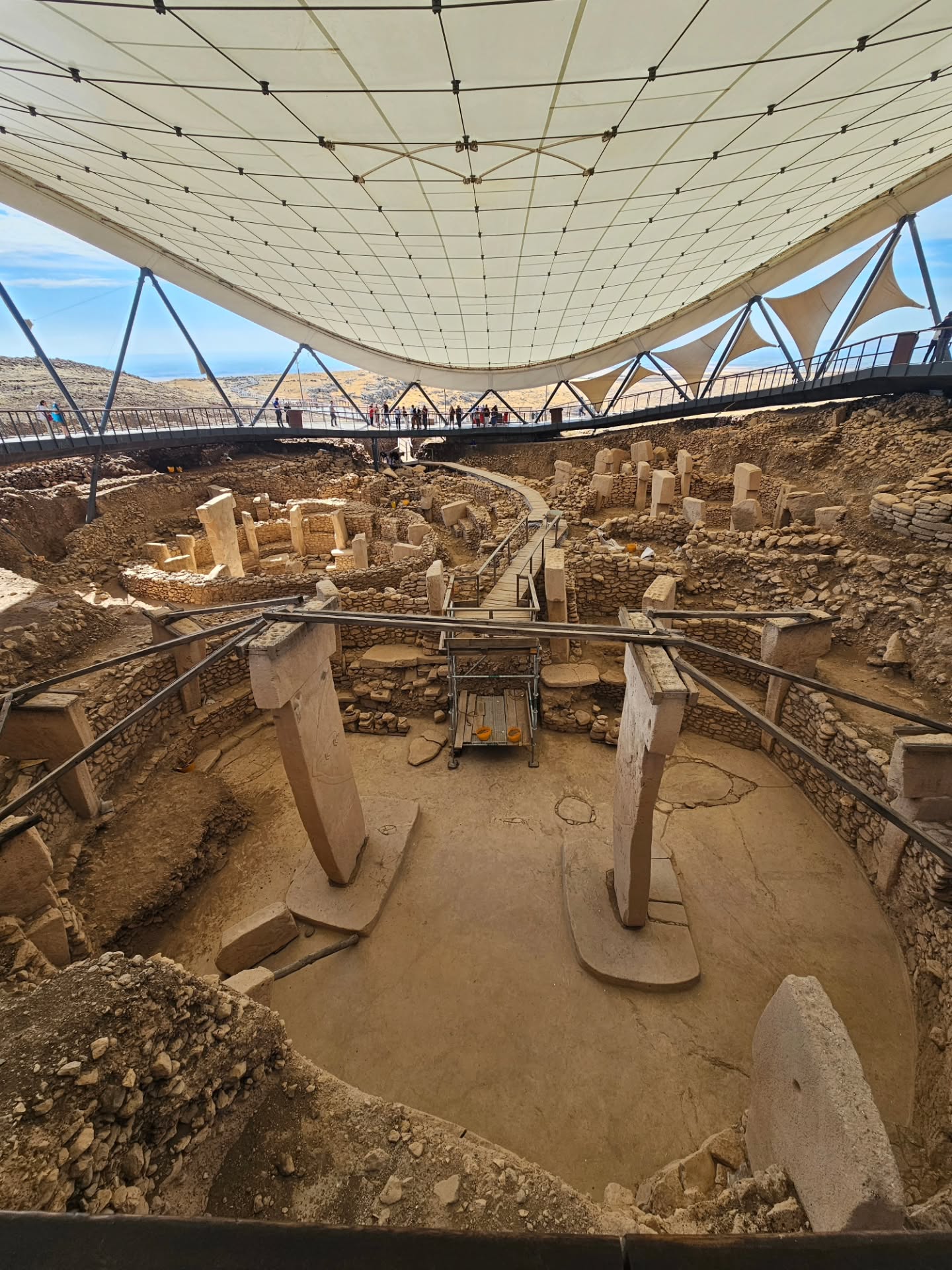
Construction began around 9600 BCE, in the early Pre-Pottery Neolithic. The builders were hunter-gatherers — farming hadn't reached Upper Mesopotamia yet, and wouldn't for centuries. With stone tools they cut T-shaped pillars from bedrock pits roughly 100 m from the hilltop and raised them in round-oval enclosures, and later in rectangular ones. Four of these enclosures, labelled A through D, have been fully unearthed so far. The work spanned well over a millennium, generation after generation returning to the same ridge to build, and eventually to bury what earlier generations had made.
Archaeologists first recorded the site in 1963, during a joint survey by Istanbul University and University of Chicago teams, and wrote it off as a probable Byzantine cemetery. The mound then sat untouched for three decades. In 1994, German archaeologist Klaus Schmidt went back through the old survey records, visited the hill himself, and recognized the limestone blocks and the flint scattered across the plateau as something far older and far stranger. He was right.
Digging ran from 1995 to 2014 under the Şanlıurfa Museum Directorate with the German Archaeological Institute, Schmidt directing. After his death in 2014, an international team led by Necmi Karul took over, and fieldwork continues today — in season you can watch teams at work in the trenches below the boardwalk. Roughly 5–10% of the mound has been opened. The rest is still sealed.
UNESCO inscribed Göbekli Tepe on the World Heritage List in 2018 under criteria (i), (ii) and (iv), as one of the first manifestations of human-made monumental architecture. The site now anchors the wider Taş Tepeler project, a regional survey of Neolithic hill sites across Şanlıurfa province. Its sister site Karahantepe, about 46 km away, has already produced rock-cut chambers, T-shaped pillars and a monumental carved human head. The full story of this hill country is still being dug up.
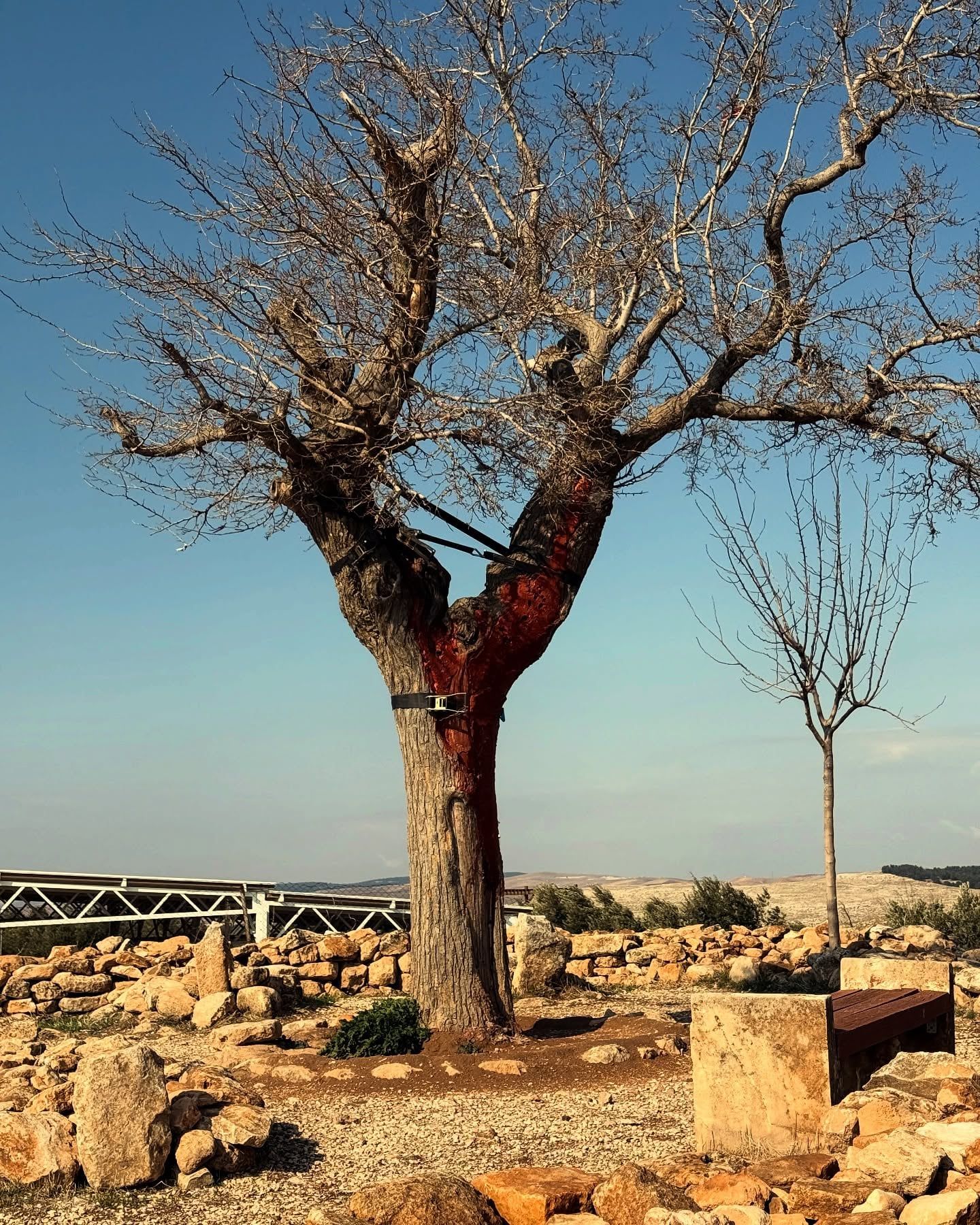
The Turkish name means "potbelly hill" — a rounded limestone rise at roughly 760 m in the Germüş mountains, looking out over the Harran Plain. On its summit sit the enclosures: circular spaces and later rectangular ones, 10–30 m in diameter, each defined by T-shaped limestone pillars. The tallest stand 5.5 m, and weight estimates run from 10 to 16 tonnes per pillar; Turkish official descriptions put the heaviest at 40 tonnes. Enclosure D is the showpiece — the largest and best-preserved circle, with twin central pillars over 5 m tall ringed by carved monoliths.
The carvings are why people cross continents for this. Foxes, boars, snakes, cranes, scorpions and vultures appear in low relief on the pillar faces, and several pillars carry arms, hands, belts and loincloths — the T-shape reads as a human body seen from the side, abstracted almost past recognition. Pillar 43, the "Vulture Stone," packs vultures, a headless human figure, a scorpion and abstract symbols onto a single face. Some scholars argue the imagery encodes an astronomical event. Give your eyes a minute at the viewpoint; the relief is shallow and easy to miss in flat light.
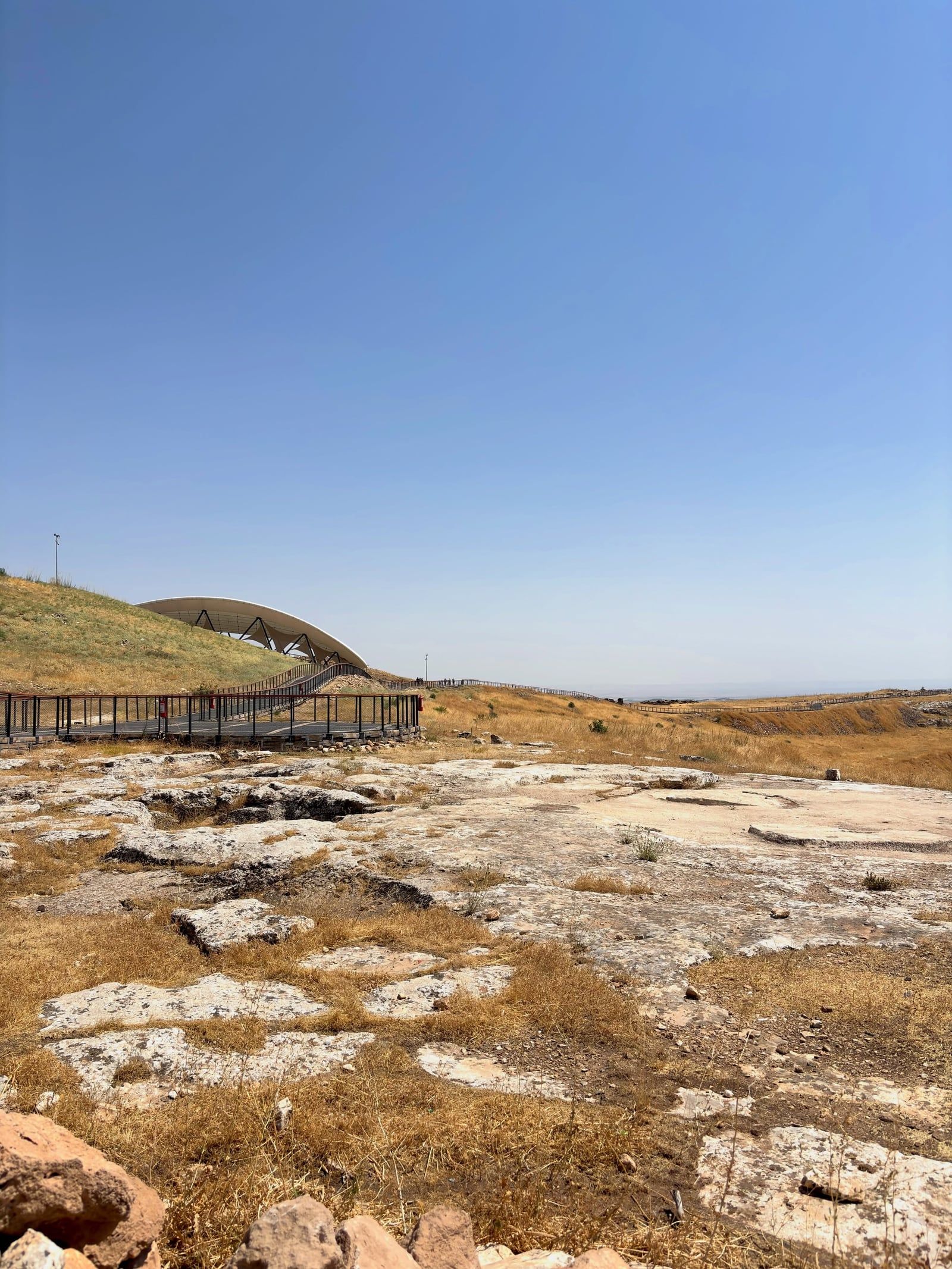
Every pillar came from bedrock pits about 100 m from the hilltop, and unprocessed cut stones still lie on the surrounding plateau exactly where Neolithic workers left them. You see all of this from a raised wooden walkway with railings, under a canopy that shades the main enclosures. Entering the monuments or trenches is prohibited — the fixed route protects the fragile limestone and you. Early morning and late afternoon turn the pillars honey-gold and give the best photographs.
Before 1995, the standard story of civilization ran: farm first, then settle, then build temples. Göbekli Tepe broke that sequence. Hunter-gatherers organized the labour to quarry, carve and raise multi-tonne pillars before anyone in the region grew a field of grain or fired a pot. Whatever pulled them up that hill came before bread. That reordering is why the site now appears in every serious account of how complex societies began.
The reliefs are the closest thing we have to a record of what those communities believed. Vultures dominate, alongside foxes, snakes, cranes and boars — animals whose meaning we can no longer read. The official site text describes the schematic, cubic pillar-figures as beings of "another dimension." Standing on the boardwalk in front of one, that phrasing doesn't feel like marketing.
For Şanlıurfa, a conservative city better known as the traditional birthplace of Abraham, Göbekli Tepe has added a second, far older identity. The Taş Tepeler project ties the site to Karahantepe and other Neolithic hills across the province, and Karahantepe was named by Archaeology Magazine one of the ten most important discoveries of 2025. With more than 90% of the mound still untouched, every excavation season can rewrite what the place means — to archaeologists, and to the people who live around it.
Göbekli Tepe predates Stonehenge's earliest stage (c. 3000 BCE) and the Great Pyramid (c. 2560 BCE) by 6,000–7,000 years. When its first pillars went up, woolly mammoths were still alive on Wrangel Island.
A joint Istanbul University and University of Chicago survey recorded the mound and dismissed it as a probable Byzantine cemetery. Archaeologists then ignored it for 31 years, until Klaus Schmidt revisited in 1994.
Only about 5–10% of the mound has been excavated. Geomagnetic surveys indicate at least 20 enclosures; just four have been dug out.
Several pillars carry low reliefs of arms, hands, belts and loincloths. The T-shape is understood as an abstract human body seen from the side.
Pillar 43 shows vultures, a headless human figure, a scorpion and abstract symbols. Some scholars have argued the imagery encodes an astronomical event.
Pillars weigh an estimated 10–16 tonnes — Turkish official descriptions go as high as 40 tonnes. They were moved with no wheels, no draft animals and no metal tools.
Construction falls in the Pre-Pottery Neolithic. The builders had stone tools and no ceramics, which is why every reconstruction of the site looks oddly bare.
Göbekli Tepe is a Neolithic archaeological site on a limestone ridge 15 km northeast of Şanlıurfa, Turkey. Built between about 9600 and 8200 BCE by hunter-gatherers, it consists of monumental enclosures defined by carved T-shaped limestone pillars, and is widely called the world's oldest known monumental temple complex. UNESCO added it to the World Heritage List in 2018.
By roughly 6,000–7,000 years. Göbekli Tepe's monuments went up between about 9600 and 8200 BCE, while Stonehenge's earliest stage dates to around 3000 BCE and the Great Pyramid to about 2560 BCE. In other words, more time separates Göbekli Tepe from Stonehenge than separates Stonehenge from today.
Hunter-gatherers of the Pre-Pottery Neolithic, before farming or pottery existed in the region. They quarried the limestone pillars from bedrock pits about 100 m from the hilltop using stone tools. This is what makes the site so significant: it proves monumental building began before agriculture.
It overturned the long-standing assumption that agriculture preceded monumental architecture. UNESCO inscribed it in 2018 under criteria (i), (ii) and (iv), recognizing it as one of the first manifestations of human-made monumental architecture. Its carved pillars also offer the best available window into the beliefs of Upper Mesopotamian communities 11,500 years ago.
No. Visitors walk a fixed route on an elevated wooden boardwalk beneath a protective canopy and look down into the excavated enclosures. Entering the monuments or trenches is prohibited, both to protect the fragile remains and for visitor safety — the site is under constant video surveillance.
€20 for foreign visitors under the official ministry tariff, sold as a 20-Euro e-bilet on muze.gov.tr; the lira amount charged at the gate moves with the exchange rate. Turkish citizens enter free with Müzekart, and students and teachers are also admitted free. Tariffs are revised periodically, so confirm the current price on muze.gov.tr before you go.
The site is open every day: 08:30–19:00 in summer (ticket office closes 18:30) and 08:30–17:30 in winter (ticket office closes 17:00). On the first day of religious holidays it stays closed until 13:00. Check muze.gov.tr the day before your visit, since hours change with little notice.
The site is 15 km northeast of the city, a 20–30 minute drive. Taxis are negotiable — agree the return price including waiting time before setting off, as recent quotes run north of 1,000 TL. Cheaper is the hourly dolmuş from the Şanlıurfa Archaeology Museum: it leaves 45 minutes past each hour, takes 45 minutes, costs 38 TL one way, and accepts card payment only.
Allow at least 90 minutes for the visitor centre and the boardwalk loop over the enclosures. Two to three hours if you read the displays properly or join a guide. If you add the Şanlıurfa Archaeology Museum, where the original carvings and Urfa Man are displayed, budget another 90 minutes.
Not required. Signage and the official 'Voice of Museum' audio guide (also available via the Müzekart app) cover the basics. A licensed guide adds real context on construction methods and the scholarly debates around the site — worth the cost if you're serious about the archaeology, skippable if you're not.
Browse verified tours with free cancellation and instant confirmation.
Find Tours