
Fly from Istanbul to Şanlıurfa and explore the world's oldest known temple complex, often paired with Karahantepe, Harran, or Mount Nemrut. Options range from a single-day round trip by plane to multi-day private itineraries across southeast Turkey.

Two-day private tour from Istanbul covering both Gobekli Tepe and Karahantepe, with an English- or Turkish-speaking guide.

Private day trip from Istanbul by air: Gobeklitepe, Karahantepe, museums, caves, and Balikligol with guide and transfers.

13-day guided loop from Istanbul through Cappadocia and southeast Turkey to Göbekli Tepe and Mt Nemrut.
 Free Cancellation
 Private full-day tour from Istanbul by round-trip flights to Göbeklitepe, Karahantepe and Şanlıurfa's old city.

Two-day, one-night tour from Istanbul covering Gobekli Tepe, Mount Nemrut, Sanliurfa Museum and four more ancient sites.
 Free Cancellation
 Fly-and-guide day trip from Istanbul covering Gobekli Tepe, Harran, and Sanliurfa city center with flights and transfers.
 Free Cancellation
 Private 14-hour day trip from Istanbul by air: Göbekli Tepe, Şanlıurfa Museum, and Abraham Pool, with lunch and guide.

Private 15-hour tour from Istanbul by air, with Şanlıurfa museum visits and guided Göbekli Tepe walk.

4-day private tour from Istanbul covering Cappadocia, Gobeklitepe and Sanliurfa, flights and meals included.
 Free Cancellation
 Private 10-hour airport-to-airport day tour from Istanbul: Gobeklitepe, Abraham's Pool, museums, and Edessa bazaar.
Read what travelers share about their experience visiting Gobekli Tepe — from practical tips to personal highlights.
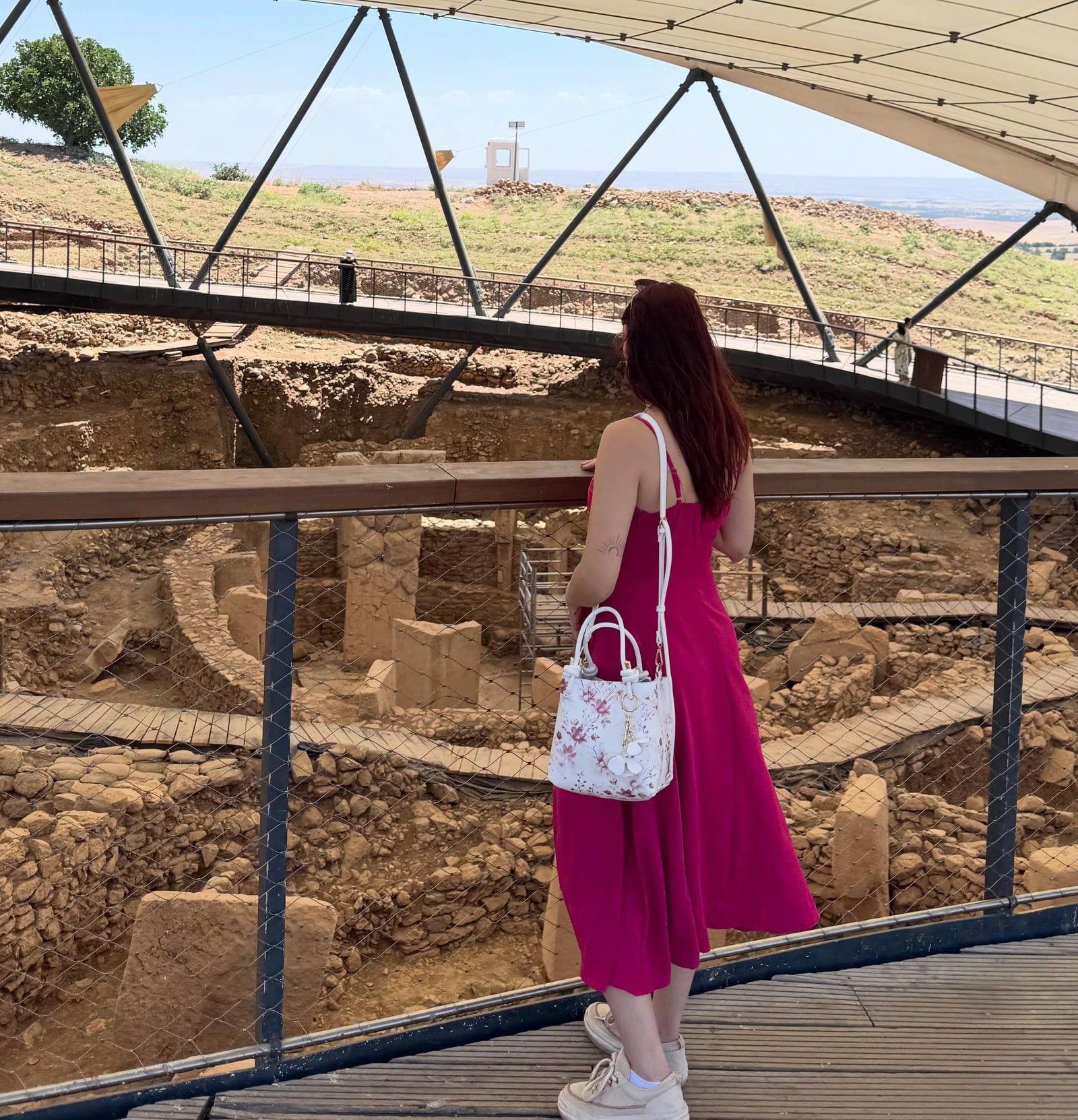
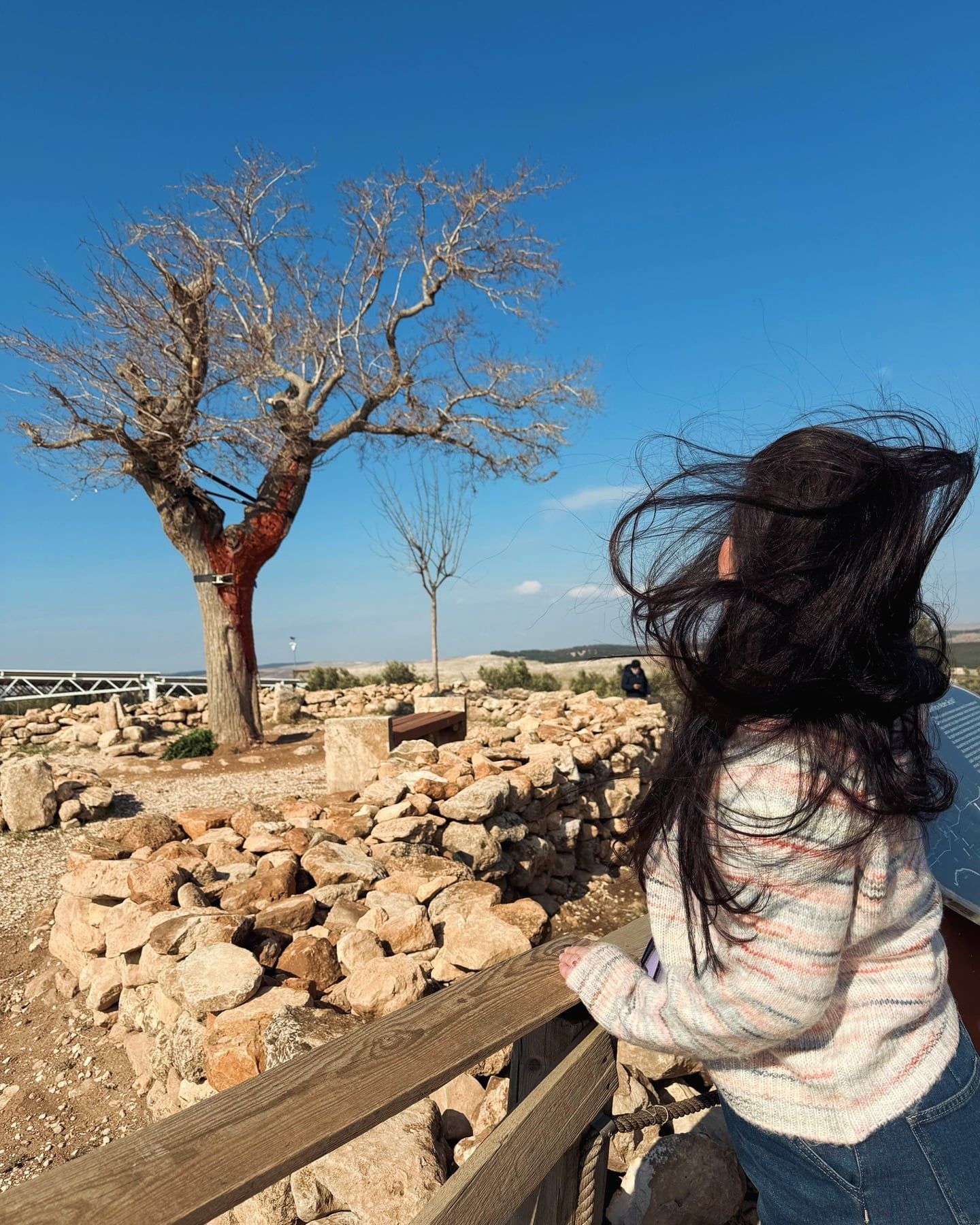
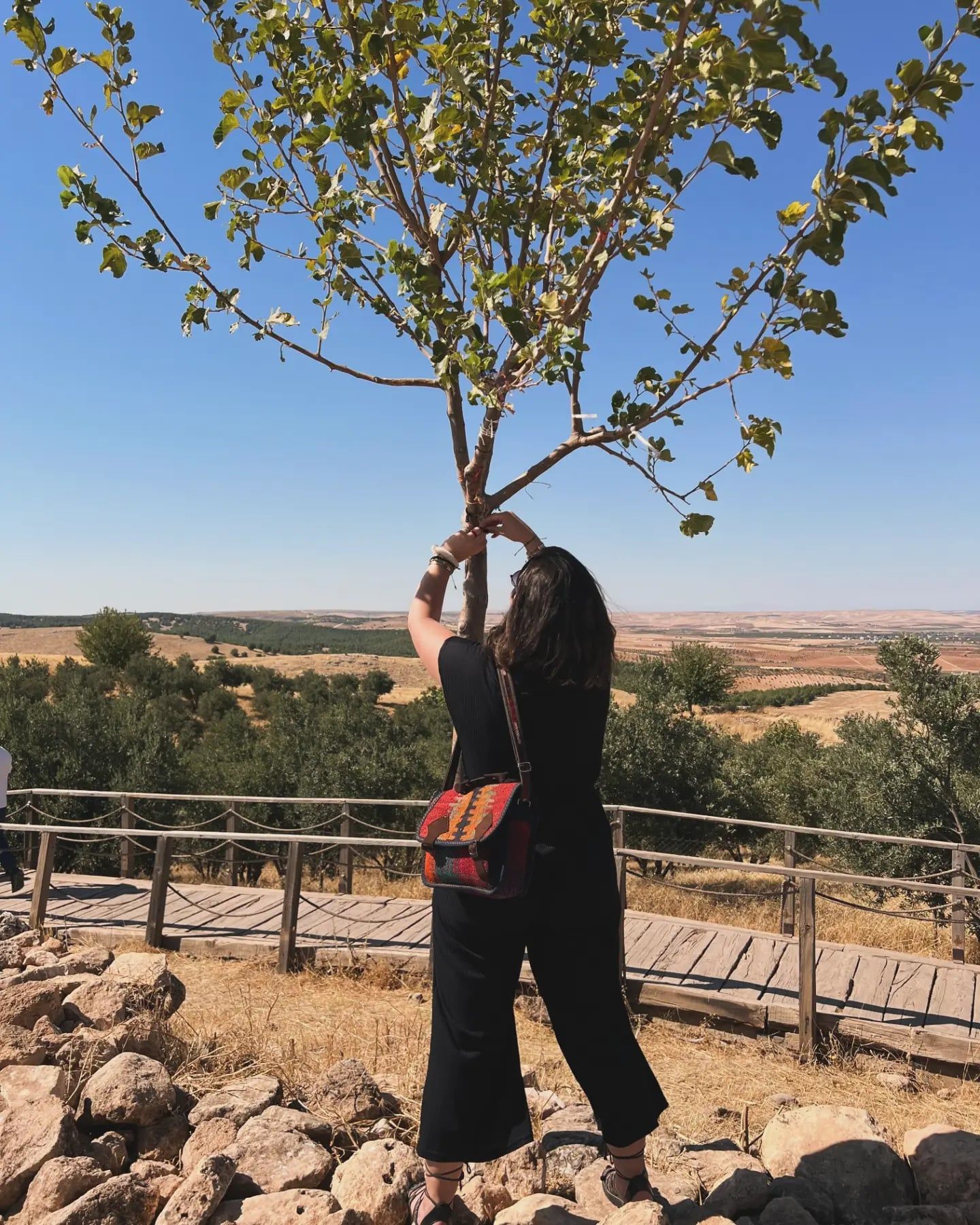
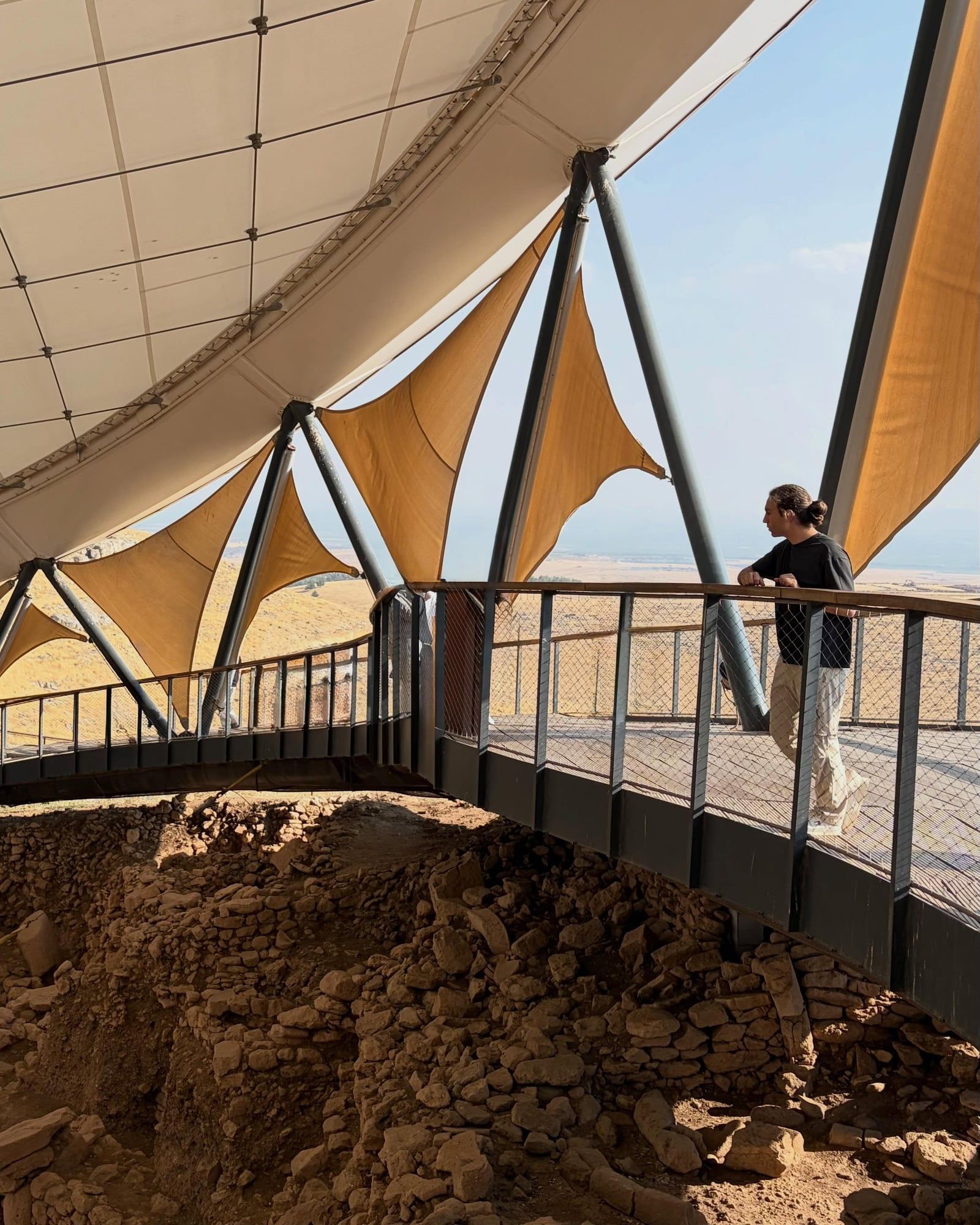
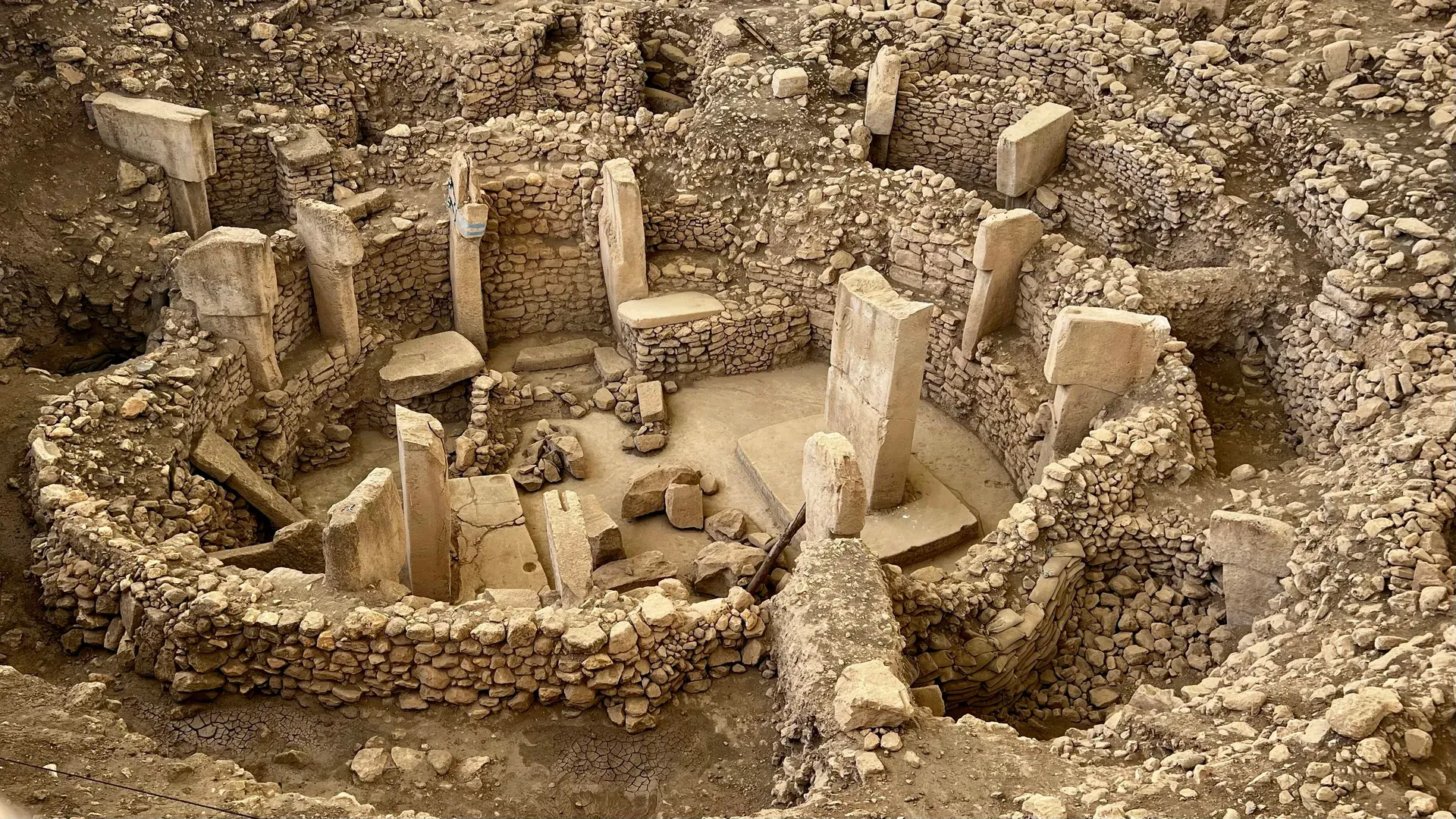
A Göbekli Tepe tour from Istanbul starts with a 1h 50m flight to Şanlıurfa GAP Airport, then a 45-minute drive out to a limestone ridge where hunter-gatherers raised carved stone pillars 11,500 years ago — about 6,000 years before Stonehenge. Most tours pack the site, the Şanlıurfa Archaeology Museum and the old city into a single long day, or stretch to two days to add Karahantepe or Mount Nemrut. You'll view the enclosures from an elevated boardwalk beneath a protective canopy, looking down on standing pillars the way the excavators do.
The largest and best-preserved enclosure holds twin central T-pillars over 5 metres tall, ringed by monoliths carved with foxes, snakes, wild boar and cranes. Every tour stops here first, and the railed walkway circles directly above it. In excavation season you may see teams working in the trenches below.
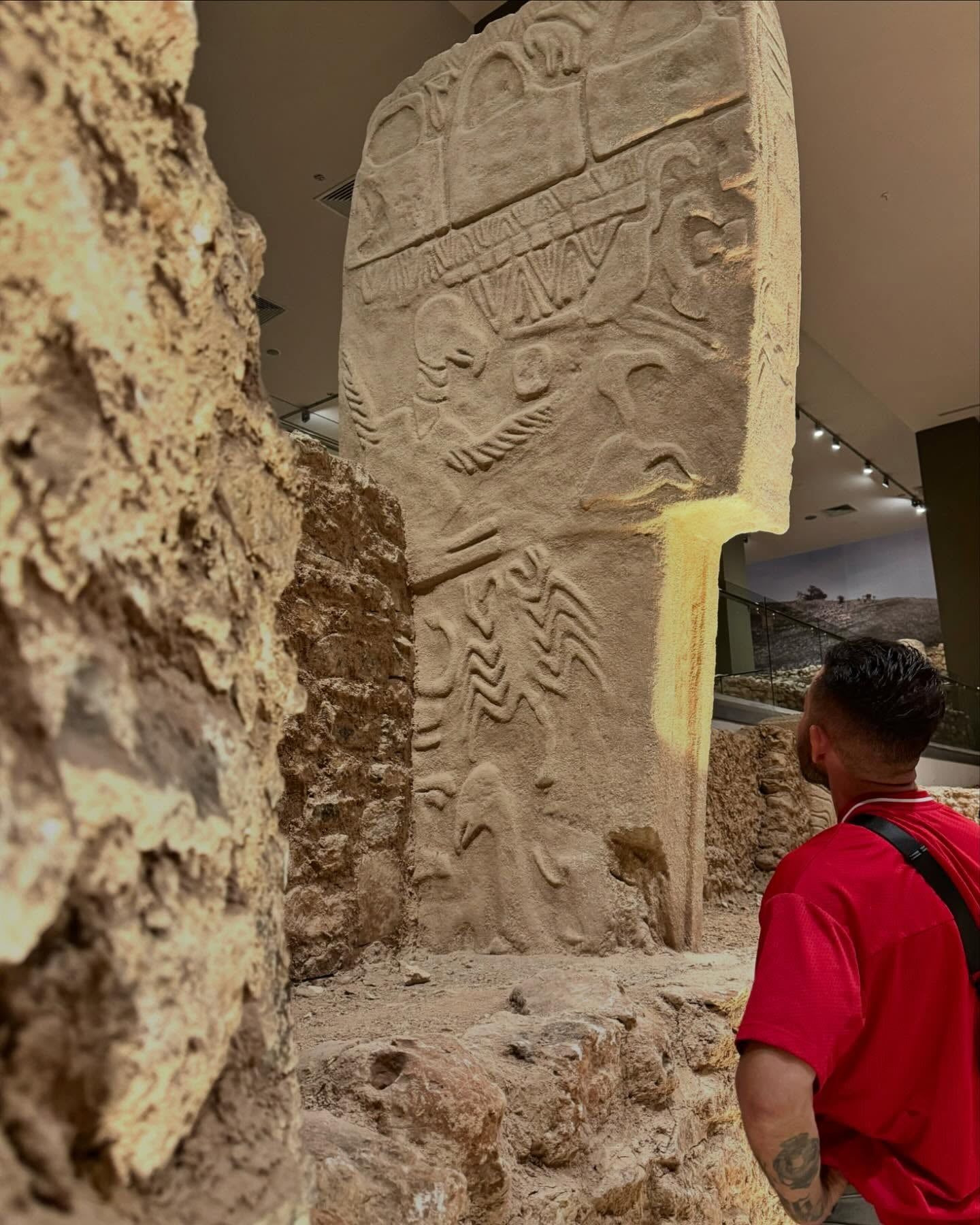
Pillar 43 is the site's most famous carving: vultures, a headless human, a scorpion and abstract symbols that some scholars read as an astronomical record. The relief is shallow, so give your eyes a minute to pick out the detail. Every guide spends time here.
Tours leave Istanbul before dawn — one private option flies the 06:25 TK 2246 from Istanbul Airport — and land in Şanlıurfa around breakfast time. The early start means you reach the exposed ridge before the worst heat. Flights from both IST and Sabiha Gökçen run daily on Turkish Airlines, Pegasus and AJet.
The original carvings — leopard, boar, fox, vulture reliefs, plus Urfa Man, the oldest known life-size human statue at about 11,000 years old — live here, not at the site. A full-scale replica of the enclosures shows the layout from ground level, which the boardwalk never can. Most day tours include it and budget around 90 minutes.
The sister site in the Tek Tek Mountains, about an hour's drive, has rock-cut chambers, a monumental carved human head and its own T-shaped pillars. Several two-day tours from Istanbul combine both, which is the complete Taş Tepeler picture. One day is enough if you only care about the headliner.
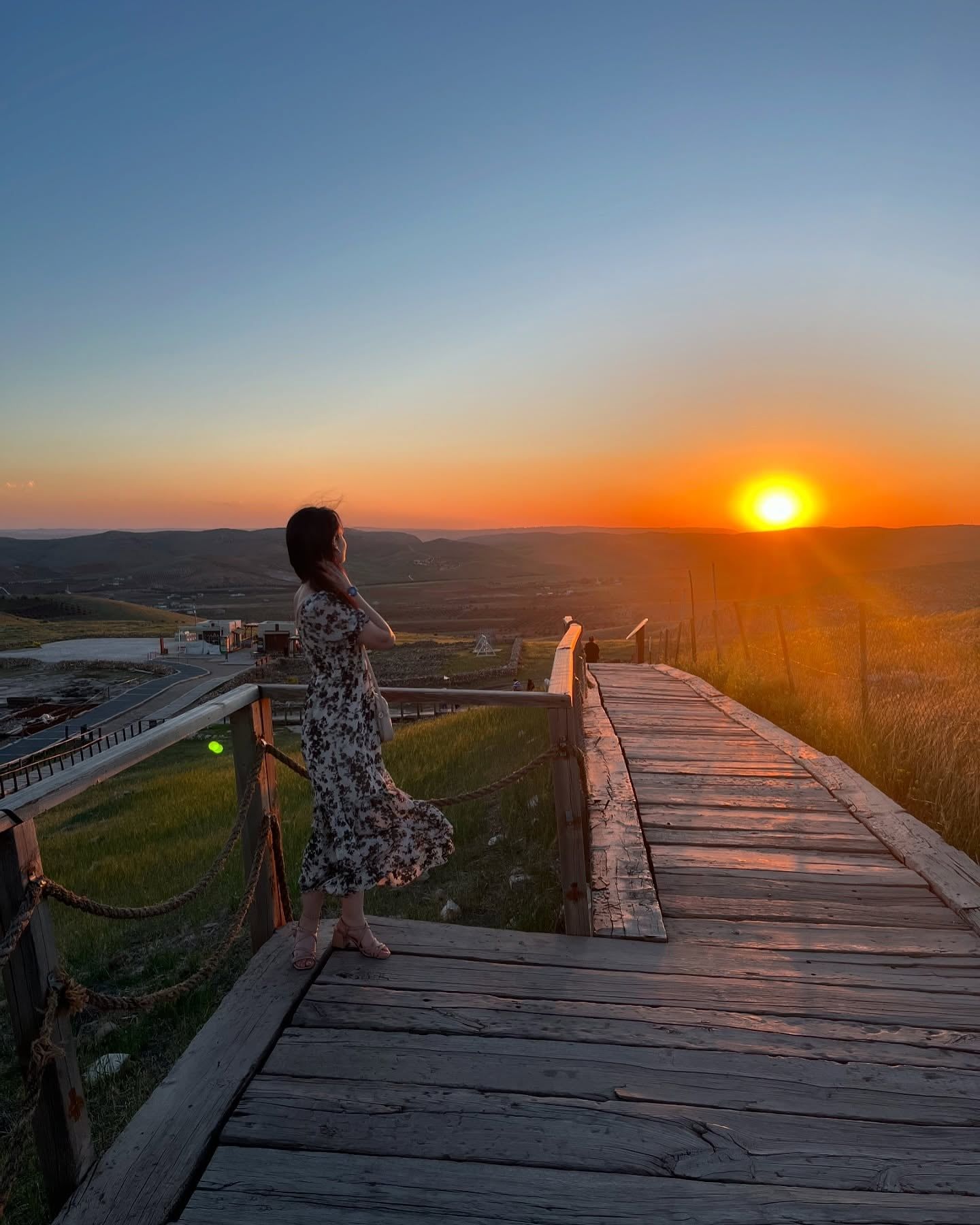
At 760 m on the edge of the Harran Plain, the ridge catches honey-gold light in the first and last hours of the day. Unprocessed monoliths still lie on the plateau where Neolithic workers cut them from quarries about 100 m away. Photographers should push their guide for an early or late slot.
Tours from Istanbul range from a US$175 shared day trip to a US$2,760 two-day private itinerary, and what's included varies wildly — flights and museum tickets are in some packages and extras in others. Read the fine print before you pay.
Every Istanbul-departure tour in the current lineup is guided and English-speaking; there's no pure self-guided option. Private tours dominate: a US$535 ten-hour private day runs airport-to-airport with a licensed guide and your own van, while group-style day trips start around US$175 with flight and guide. Longer private tours bundle flights, hotels and a guide who rides with you from Istanbul.
Some tours include the Göbekli Tepe entrance fee and the Archaeology Museum; others leave the €20 site ticket for you to buy. Check the inclusions list — the private US$915 day trip covers flights, museum tickets, lunch and all transfers, while the US$849 private tour includes flights and guiding but itemises nothing else. Entry is free for students and teachers with ID.
Day tours depend on domestic flight availability, and one operator states the tour only runs if flights have seats — book at least a week or two ahead in spring and autumn. One supplier sends flight tickets three days before departure, so late changes are awkward. Tours with 24-hour free cancellation (several do) are the safer bet if your dates might shift.
They split roughly in half. The US$175 day trip, the US$535 private day and the US$915 option offer a full refund up to 24 hours before departure; the US$1,300 private day and the 13-day tour are final sale with zero refund. The two-day Nemrut combo refunds fully only if you cancel 3 full days out. Know which type you're buying before, not after.
Common add-ons: Karahantepe (46–55 km), Harran's beehive mud-brick houses (~50 km), Balıklıgöl and the old city in Şanlıurfa, and Mount Nemrut's stone heads on the two-day tour. The 13-day Istanbul-to-Nemrut route folds all of it plus Cappadocia into one loop. If you want Karahantepe, pick a tour that names it — adding it on the day is hard without your own car.
The site itself is broadly wheelchair-friendly: a free shuttle covers the 1 km from visitor centre to mound, and the boardwalk is flat with railings. Several tours list wheelchair-accessible transport, but you must request it in advance — one operator says so explicitly. Two tours flag themselves as unsuitable for pregnant travellers and people with poor cardiovascular health, so check the additional-info section.
The cheapest 14-hour itinerary spends just 2 hours at Göbekli Tepe against 3 hours flying, 2 hours of transfers and 2 hours of waiting. That trade-off is normal for day trips — the fix is the two-day private option, which gives you a full unhurried morning on the ridge. Flights cost roughly €40–70 each way if you ever go independent.
All ten current tours run in English; one offers Turkish as well, and the 4-day Cappadocia combo lists six languages including German, French and Spanish. A guide matters more here than at most sites — the reliefs are subtle and the signage thin, and licensed guides explain the quarry pits, the burial-by-backfill theory and the Karahantepe connection you'd otherwise miss.
Swipe to see more
| Shared day trip by plane | Private day tour by plane | 2-day Göbekli Tepe + Karahantepe private | 2-day Göbekli Tepe + Mount Nemrut | 13-day Magic Explorer | |
|---|---|---|---|---|---|
| Price from (per adult) | US$175 | US$535–1,300 | US$2,760 | US$1,082 | US$3,888 |
| Duration | Full day (~14h door to door) | 10–15 hours | 48 hours | 48 hours | 13 days, Istanbul to Istanbul |
| Includes | Flights, licensed guide, vehicle, fees and taxes; airport transfer options selectable at booking | US$535 and US$915 versions cover tickets and Sanliurfa transfers; the US$1,300 version adds Istanbul hotel pickup, flights, minivan and museum fees | Private guide (English or Turkish), breakfast, hotel pickup arranged individually; rated 5.0 from 98 reviews | Round-trip flights, all airport transfers, breakfast, lunch, and entry to Nemrut, Arsemia, Karakuş Tumulus, the Archaeology Museum and Balıklıgöl | 12 nights' accommodation, entrance fees, guide, air-conditioned transport, breakfasts and dinners, Istanbul transfers |
| Cancellation | Full refund up to 24 hours before | Free cancellation up to 24h on the US$535/US$915 options; final sale on the US$1,300 option | Full refund 6+ days out, 50% between 2–6 days, nothing inside 2 days | Full refund if cancelled 3+ full days before | Final sale — no refunds |
| Best for | Travellers who want Göbekli Tepe plus Harran and Balıklıgöl in one day on a budget | Couples and families who want their own van, guide and pacing | Anyone with two days who wants both Taş Tepeler sites properly — the best-reviewed tour on the page | First-time visitors to the southeast who want the colossal stone heads and the oldest temple in one trip | Travellers with two weeks who want Cappadocia, Göbekli Tepe, Harran and Nemrut stitched together without planning anything |
Swipe to see more
Summer (1 April – 31 October): 08:30–19:00, ticket office closes 18:30. Winter: 08:30–17:30, ticket office closes 17:00. The site opens every day of the year.
On the first day of religious holidays it stays closed until 13:00 — worth checking the Turkish holiday calendar if your day trip lands on one.
For tour timing from Istanbul, the 08:30 opening pairs neatly with morning flights: the 06:25 Turkish Airlines departure from Istanbul Airport lands around 08:20, and the drive from GAP Airport takes about 45 minutes. You can be on the boardwalk close to opening, before the heat and the coach crowds. Note that ticket sales stop 30 minutes before closing, so don't cut the day too fine on the return leg.
From Istanbul: Turkish Airlines, Pegasus and AJet fly IST and SAW to Şanlıurfa GAP Airport (GNY) several times daily, about 1h 50m in the air; fares run roughly €40–70 each way. The site is 40.8 km from the airport — count on 45 minutes by road.
From Şanlıurfa city (15 km):
Between the visitor centre and the mound there's a free shuttle, or a 1 km walk that takes about 15 minutes.
Best months: March–May and September–November. April covers the plateau in wildflowers; autumn brings cooler air, golden light and thinner crowds. Both give you full daylight for the open-air boardwalk loop.
Avoid July and August if you can. Şanlıurfa is one of Turkey's hottest cities — temperatures regularly pass 40°C (the record is 45.2°C, set in August 2019) and the limestone ridge has almost no shade outside the canopy. If you're going then, be at the gate for 08:30 and plan to finish outdoors by 10:30, then retreat to the air-conditioned Archaeology Museum.
December to February means 6–9°C, wind, occasional frost and snow-dusted pillars — atmospheric, but short daylight and the 17:30 winter closing squeeze the day. Since day trips from Istanbul are fixed around flight times, spring and autumn tours are the ones to book.
The site is broadly wheelchair-accessible. A free shuttle covers the 1 km between the main entrance and the monument, the paved path to the excavation area is gently sloped, and the visit runs on a flat wooden boardwalk with railings beneath the protective canopy.
The stretch from car park to visitor centre may have some uneven ground — wheelchair users may want a hand there. You can't enter the trenches; all viewing is from walkway level.
Elderly visitors manage well: the shuttle removes the uphill walk, the visitor centre has a café, restrooms and seating, and the canopy shades the main enclosures. Several tours list wheelchair-accessible vehicles, but you must request accessible transport in advance. Two tours flag themselves as unsuitable for pregnant travellers and people with cardiovascular problems.
The modern visitor centre at the base of the mound holds the ticket office, exhibits, dioramas, a scale model, artifact replicas and an animation hall that reconstructs the Neolithic world — plus restrooms, a café and a souvenir shop. Do the exhibits before the mound; the context changes what you see up top.
Up on the ridge there's essentially nothing beyond the boardwalk and the canopy. Carry water, a hat and sunscreen year-round; the plateau is exposed even in winter, when the wind makes it feel colder than Şanlıurfa. Sturdy shoes over sandals.
The official audio guide runs through the 'Voice of Museum' service and the Müzekart app — download the app before you go, since signal on the hill can be patchy. Allow 90 minutes minimum for the visitor centre and boardwalk loop, or 2–3 hours with a guide.
Stay on the walkway. Entering the monuments or excavation trenches is prohibited, and the whole site is under constant video surveillance. You view everything from the railed boardwalk.
Touch nothing. Collecting, moving or removing stones or artefacts of any kind is forbidden. Turkish law defines 'artefact' very broadly and carries prison sentences of up to ten years for illegal export — never pocket so much as a flint flake from the surrounding fields.
Photography for personal use is allowed from the boardwalk; early morning and late afternoon give the best light on the pillars. Drones are banned without explicit national permission, and commercial filming needs prior approval from the excavation director and the Ministry of Culture.
No dress code applies at the open-air site — but if your tour adds Şanlıurfa's mosques or Balıklıgöl, cover shoulders and knees.
Yes. Turkish Airlines, Pegasus and AJet fly both Istanbul airports to Şanlıurfa GAP Airport several times a day, about 1h 50m each way — the 06:25 Turkish Airlines departure lands around 08:20. The site is roughly 40 km from the airport, so a 14-hour door-to-door day works. Expect about 2 hours at the site itself on the tighter itineraries, with the rest spent flying, transferring and touring Şanlıurfa.
Day trips start around US$175 per person with flights, guide and vehicle, rising to US$535–1,300 for private versions with a dedicated van and licensed guide. Two-day itineraries combining Karahantepe or Mount Nemrut run US$1,082–2,760, and the 13-day Istanbul loop costs US$3,888. The €20 site entrance is included in some packages and excluded in others — always check the inclusions list.
Depends on the operator. The US$915 private day trip covers flights, museum tickets and lunch; the US$535 version includes attraction tickets and Sanliurfa transfers. The US$849 private tour includes flights, guiding and van but doesn't itemise entry fees. Independent entry costs €20 for foreign visitors, though students and teachers get in free with ID.
One day works if Göbekli Tepe plus Şanlıurfa's museum and old city is enough, but you'll spend most of the day in transit — one 14-hour schedule allots just 2 hours at the site. Two days (from about US$1,082) let you add Karahantepe, the sister site an hour's drive away, or Mount Nemrut's stone heads. If Taş Tepeler is the reason you're flying east, take the two-day option.
Half the tours offer free cancellation up to 24 hours before departure, including the US$175 day trip and both mid-range private day tours. The two-day Nemrut combo requires 3 full days' notice; the US$2,760 private two-day tour refunds fully only 6+ days out, 50% between 2 and 6 days. The US$1,300 private day and the 13-day tour are final sale with no refund at all.
The tightest 14-hour itinerary schedules about 2 hours on site; private tours pace themselves and typically spend 2–3 hours across the visitor centre and boardwalk loop. Guides recommend 90 minutes minimum for the exhibits and the walkway, more if you read the displays. Two-day tours give you a relaxed half-day at the site plus Karahantepe.
A guide isn't required — signage and the official 'Voice of Museum' audio guide (also on the Müzekart app) cover the basics. But the reliefs are shallow and easy to miss without explanation, and licensed guides add the quarry pits, Pillar 43's astronomical debate and the Karahantepe connection. Every Istanbul-departure tour includes an English-speaking licensed guide, so the question mostly matters if you're flying independent.
By 6,000–7,000 years. Göbekli Tepe's enclosures went up between about 9600 and 8200 BCE; Stonehenge's earliest stage dates to around 3000 BCE and the Great Pyramid to about 2560 BCE. Hunter-gatherers built it before farming or pottery existed, which is why UNESCO inscribed it in 2018 as some of the first monumental architecture anywhere.
No. The route is a fixed elevated wooden walkway with railings, running beneath a protective canopy, and you look down into the excavated enclosures. Entering the monuments or trenches is prohibited and the site is under video surveillance. The full-scale enclosure replica at the Şanlıurfa Archaeology Museum — included on most tours — is the closest you'll get to ground level.
There's no dress code at the site, but the ridge is fully exposed — sun-covering clothing, a hat, sunscreen and sturdy shoes, whatever the month. Carry more water than you think you need in summer, when 40°C days are routine; in winter the plateau is windy and cold at 6–9°C. If your tour visits Şanlıurfa's mosques or Balıklıgöl, cover shoulders and knees.
Browse verified tours with free cancellation and instant confirmation.
Find Tours


A 48-hour private tour that starts and ends in Istanbul and covers two sites: Gobekli Tepe and the newer-excavated Karahantepe nearby. It's fully private — no shared group — and your guide works in English or Turkish. Pickup is arranged individually: the operator confirms your hotel or address with you directly before departure, so there's no fixed meeting point. Breakfast is the only meal included in the price; gratuities and any other extras are not. Cancellation terms: a full refund if you cancel at least 6 full days before departure, and a partial refund if you cancel between 2 and 6 days out. Anything inside 2 days gets nothing back, so decide early.
If you cancel at least 6 full day(s) before the scheduled departure time, you will receive a full refund.<br>If you cancel between 2 and 6 day(s) before the scheduled departure time, you will receive a 50% refund.<br>If you cancel within 2 day(s) of the scheduled departure, you will receive a 0% refund.
English, Turkish


This is a full-day private tour that starts with a 6:25 AM flight from Istanbul (the suggested TK 2246 from Istanbul Airport) to Şanlıurfa, about two hours in the air. Your guide picks you up from your hotel around an hour before, rides to the airport with you, and flies with you — good English-speaking guides are scarce in Şanlıurfa, so the operator brings one from Istanbul. You travel in a private Mercedes minivan with driver for the day, and you're dropped back at your Istanbul hotel late that night after the 20:15 return flight (TK 2243). On the ground, the itinerary runs about two hours each at Karahantepe — the bedrock site with a carved human head and phallic totem — and Gobeklitepe, where excavations are still ongoing. Lunch is at a local kebab restaurant (Cevahirhan is the operator's pick; lunch is not included, it's à la carte). The afternoon covers the Şanlıurfa Archaeology Museum and Haleplibahçe Mosaic Museum together (two hours), the Kızılkoyun caves with their Roman tombs (45 minutes), Balikligol, the sacred fish lake tied to the Abraham legend (30 minutes), and the old bazaar. The day wraps around 5:30–6:00 PM, in time for the airport run. Included: round-trip flights, admission fees for Gobeklitepe and the Archaeology Museum, guiding in English, parking, and hotel transfers — but only from hotels in the European-side city center of Istanbul. Two things to know before booking: the operator asks you not to buy your own flight tickets (they'll arrange them if requested), and all sales are final — no refunds on cancellation.
All sales are final. No refund is available for cancellations.
English


Thirteen days, Istanbul to Istanbul, running west-to-east across Turkey and back. The route takes in Göreme in Cappadocia, then heads southeast to Şanlıurfa for Göbekli Tepe, Harran, Balıklıgöl (Ayni Zeliha Lake), the Haleplibahçe Mosaic Museum, the Archaeology Museum, the Cave of the Prophet Abraham, and the Kızılkoyun Necropolis, plus the Mosaic Museum in Gaziantep and Mt Nemrut. An English-speaking guide stays with you for the full tour. Transport is in a fully air-conditioned, non-smoking vehicle. All entrance fees are covered, along with 12 nights of accommodation, breakfast and dinner each day, and both inbound and outbound airport transfers in Istanbul. Tips are included too, except for the driver and guide. One thing to know before booking: all sales are final. There's no refund if you cancel, so be sure of your dates.
All sales are final. No refund is available for cancellations.
English


This private tour starts with an early-morning hotel pickup in Istanbul and a domestic flight to Şanlıurfa, putting both Göbeklitepe and Karahantepe within reach of a single day. A private driver handles every transfer on both ends, and the day runs with a licensed English-speaking local guide at a pace you can adjust — the only fixed constraint is the confirmed flight schedule. The order works well: you start at the Şanlıurfa museum complex (about 60 minutes) to see the finds connected to both sites before standing in front of them. Then 30 minutes walking the Balıklıgöl district and its sacred pools, and an hour at Mevlid-i Halil Cave, a working place of prayer associated with the Prophet Abraham — dress and behave accordingly there. After that, roughly two hours at Göbeklitepe on the protected viewing platforms, followed by 60 minutes at Karahantepe to see its T-shaped pillars and carved stone. The day ends with a private transfer to GAP Airport and the flight back, where a driver meets you in Istanbul. Round-trip domestic flights, all transfers, museum admission tickets, lunch, a light breakfast, a licensed guide and all taxes are included. Cancel at least 24 hours before departure for a full refund.
For a full refund, cancel at least 24 hours before the scheduled departure time.
English


This 48-hour tour packs two big-name sites into one trip from Istanbul: Gobekli Tepe near Sanliurfa and the giant stone statues of King Antiochus I on Mount Nemrut. It runs with an English-speaking guide and includes all airport transfers, plus breakfast and lunch. Alongside the two headliners, your entry tickets cover the Sanliurfa Archaeology and Mosaic Museum, Arsemia Ancient City, Karakus Tumulus, and Balikligol. The Nemrut statues sit in two matching sets — one facing sunrise, one facing sunset — so timing on the mountain decides which view you get. Museum tickets are all included; there's no paying at the gate. Pickup is available from any location within the area the operator specifies, confirmed at booking. Cancel at least 3 full days before departure for a full refund; inside 3 days there's no refund at all.
If you cancel at least 3 full day(s) before the scheduled departure time, you will receive a full refund.<br>If you cancel within 3 day(s) of the scheduled departure, you will receive a 0% refund.
English


This is a full-day circuit built around flights: you're picked up at your Istanbul hotel, flown Istanbul–Sanliurfa and back, and driven between Gobekli Tepe, Harran, and Sanliurfa's city center in an air-conditioned vehicle. A professional licensed local guide (English-speaking) accompanies the whole day, and all fees and taxes are covered. Airport transfers are private at both ends. Note the option structure: flights, airport transfers, and the vehicle only run if you select the corresponding booking option — the cheaper tier covers the guiding and site visits, not the transport legs. Check what your option includes before assuming flights are in it. If your hotel isn't listed for pickup, add its name and address on the booking form. Cancel at least 24 hours before departure for a full refund.
For a full refund, cancel at least 24 hours before the scheduled departure time.
English


This one runs on a tight clock: 14 hours total, with about 2 hours at Göbekli Tepe itself, plus roughly 7 hours of city touring, 3 hours of flying, 2 hours of hotel-to-airport transfers, and 2 hours of waiting built into the schedule. Pick-up is early morning at your Istanbul hotel, followed by an approximately 2-hour flight to Şanlıurfa, where your guide meets you at the airport. The ground itinerary stacks four stops. Göbekli Tepe comes first — around 20 temples have been identified at the site, and excavation is still ongoing. Then the Sanlıurfa Archaeological Museum for an hour, followed by Abraham Pool (Balıklı Göl), the sacred fish lake tied to Jewish and Islamic legend, with its cave and surrounding walking area — about an hour there, with the stop listed at up to 3 hours depending on pacing. The return works in reverse: you're transferred to Gaziantep airport for the flight back to Istanbul, where a representative meets you for the hotel drop-off. It's a private tour with your own air-conditioned vehicle, a licensed English-speaking guide, and lunch included; flights and any other extras aren't. Cancel at least 24 hours ahead for a full refund.
For a full refund, cancel at least 24 hours before the scheduled departure time.
English


This is a full-day trip that starts with a flight: domestic round-trip flights between Istanbul and Şanlıurfa are included, along with a VIP air-conditioned van for all transfers and tours. Pick-up and drop-off work from any address in Istanbul (Istanbul Sabiha Gökçen Airport transfers included). A licensed English-speaking local guide runs the day, and all local taxes and service charges are covered. The itinerary runs about 15 hours. First stop is the ongoing excavation at Göbekli Tepe (2 hours on site), where you walk the dig with the guide. Then it's back to Şanlıurfa for the Archaeological and Mosaic Museum, including Haleplibahçe — its mosaic hall spans about 6,000 m² with an 82 m diameter, column-free, with mosaics displayed in situ (1 hour). Next are the Pools of Abraham and the cave of Mevlid-i Halilulrahman, where local tradition places the Prophet Abraham's birth (1 hour, plus a 30-minute stop at the cave site). Lunch is at a local restaurant. You can choose a morning or afternoon departure. One caution: all sales are final — no refunds on cancellation, so be sure of your dates before booking.
All sales are final. No refund is available for cancellations.
English


A 4-day private itinerary that starts with an early hotel pickup in Istanbul (between 04:15 and 06:30, depending on your flight) and flies you east — the 08:00 departure time refers to the flight itself. From there the route covers Cappadocia's rock formations and underground cities, the stone pillars of Gobeklitepe near Sanliurfa, and Sanliurfa city itself, all with a private guide. Nearly everything is included: domestic flights via airport transfers from any Istanbul hotel, private transportation throughout, entrance tickets to the museums and sights on the itinerary, 3 nights of accommodation, breakfast, lunch and dinner, plus all fees and taxes. With your own vehicle and guide, the pace is yours to set at each stop. Guides are available in English, German, French, Italian and Portuguese. Cancellation is full refund up to 3 full days before departure; inside that window you get nothing back, so be sure before booking.
If you cancel at least 3 full day(s) before the scheduled departure time, you will receive a full refund.<br>If you cancel within 3 day(s) of the scheduled departure, you will receive a 0% refund.
German, Portuguese, English, Italian, French, Spanish


A 10-hour private day built around a flight connection: your guide meets you at Sanliurfa airport with a name sign, and the tour runs airport-to-airport in a private air-conditioned van with a licensed English-speaking guide. No group, no fixed bus schedule — the pacing is yours. The day starts with a transfer straight to Gobeklitepe (about 3 hours on site). Back in the city, you'll get an hour at the Pool and Cave of Abraham, an hour at the Sanliurfa Archaeology and Mosaic Museums — which hold finds from Gobeklitepe, Karahantepe, Harran, and ancient Edessa — and a 30-minute stop at the local bazaar. Tickets and all attraction entry fees are included, along with roundtrip airport transfers. Hotel pickup is also possible; you arrange the details directly with the operator after booking. Cancel at least 24 hours before departure for a full refund. Flights to and from Istanbul are not included in the listed price.
For a full refund, cancel at least 24 hours before the scheduled departure time.
English