Twelve thousand years ago, before pottery, metal, or the wheel, hunter-gatherers on a bare hill in southern Turkey carved snakes, vultures, scorpions, and headless men into limestone pillars. That hill is Göbekli Tepe, and its reliefs are the oldest monumental stone carvings known anywhere on earth. They are also the reason most visitors ride out from Şanlıurfa in the first place.
This guide covers what is actually carved there — the animal inventory, the T-shaped pillars carved as bodies, the Vulture Stone — then weighs the competing interpretations, including the viral "world's oldest calendar" claim, and finishes with exactly where to see each carving today.
Göbekli Tepe's Carvings at a Glance
Carving began here around 9600 BCE, when the Pre-Pottery Neolithic sanctuary was raised by groups who still lived by hunting and gathering. Radiocarbon dates put the site's use between roughly 9500 and 8000 BCE, which makes the earliest reliefs about 11,500 years old. UNESCO added Göbekli Tepe to the World Heritage List in 2018.
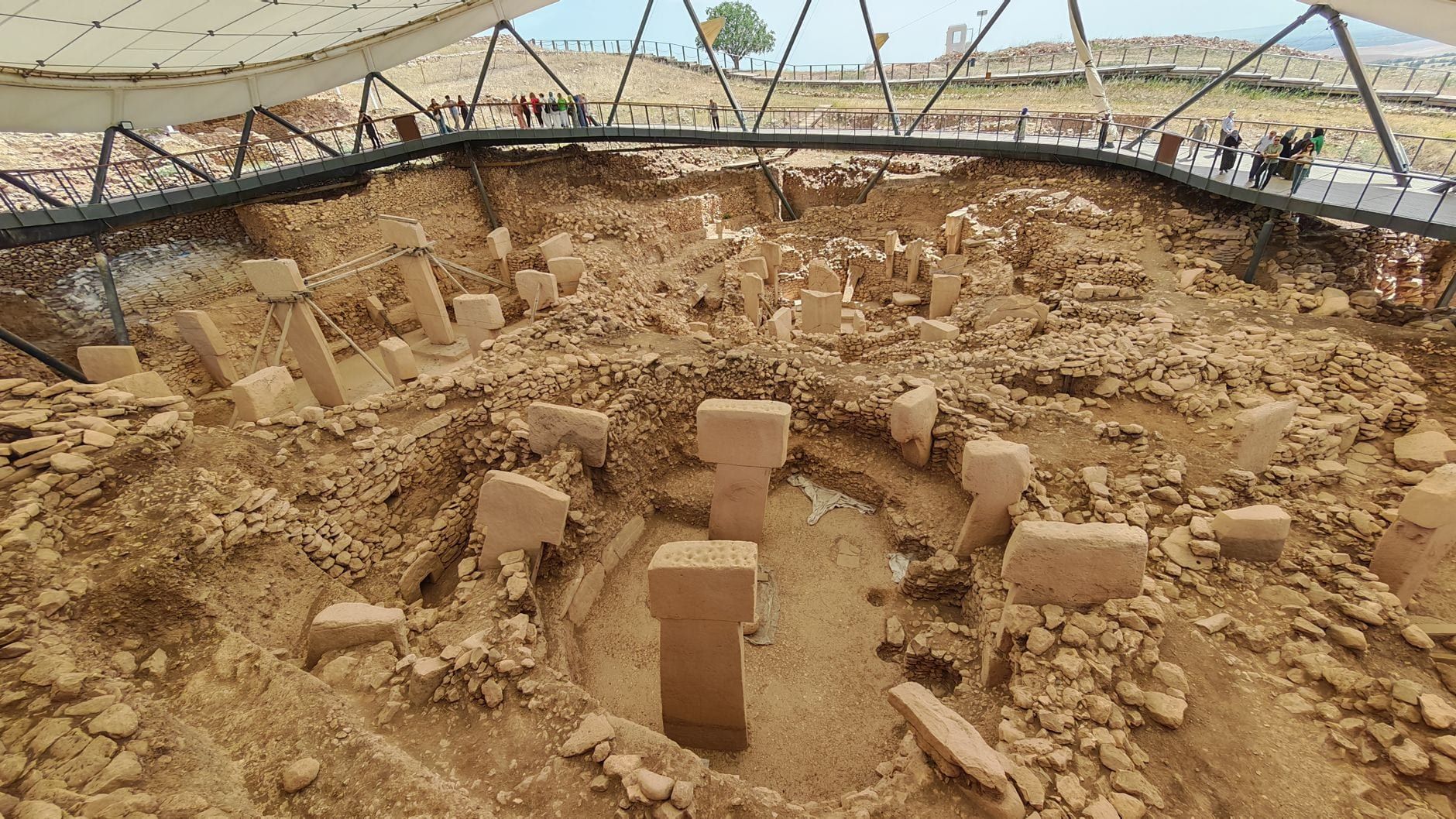
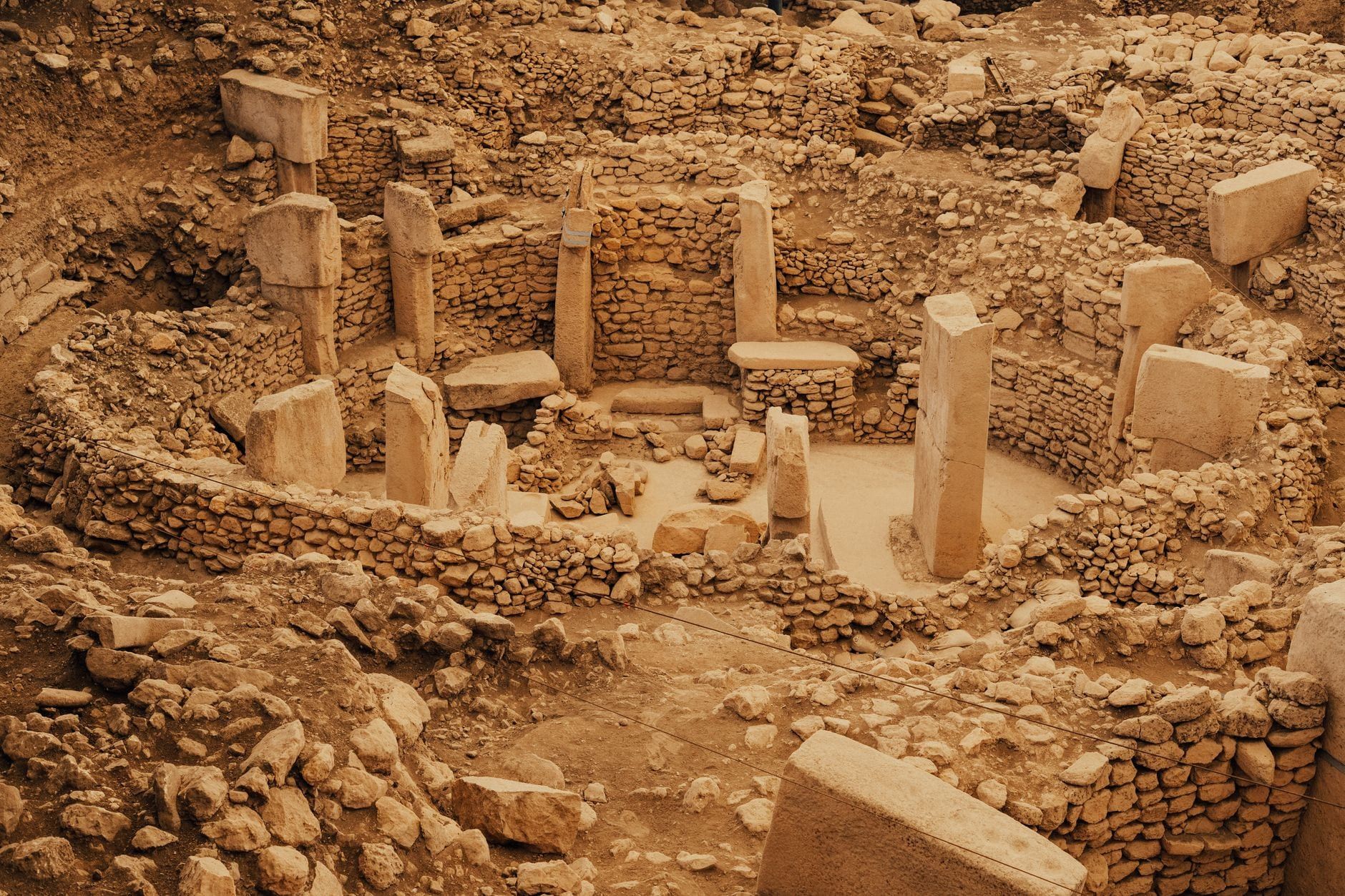
The scale is bigger than the excavated part suggests. Geophysical surveys have detected at least 20 large enclosures buried in the mound, and only about 10% of the site has been dug. The roughly 200 pillars uncovered so far stand in circular enclosures — Enclosure D, the largest complete one, spans about 30 m and produced the site's oldest radiocarbon date, 9530 BCE.
Nearly every pillar is carved, mostly in low relief, with occasional passages of high relief where figures stand almost free of the stone. The technique matters for your visit: these are shallow images, read best in slanting light. For the fuller story of the site's discovery and excavation, see our background guide to Göbekli Tepe; here we stay with the carvings themselves — what they show, what they might mean, and how to see them.
What the Carvings Depict: Animals, Humans, and Abstract Signs
Animals dominate the carved surface, and three species lead the count: serpents, foxes, and boars. Around them runs a longer menagerie — lions, bulls, gazelle, mouflon, onager, ducks and other birds, insects and arachnids, and vultures above all. Sculptures found around the site add spiders and scorpions. One detail recurs wherever an animal can be sexed: it is male.
Humans are startlingly rare. Pillar 43 carries one of the very few human figures carved on a pillar — a male, headless, with an erect penis. Elsewhere on the site stands a kneeling figure carrying a human head in its hands. Against hundreds of animal images, that is close to the entire human inventory, and the imbalance is surely deliberate.
Then there are the abstract signs, carved in deliberate, visible positions on major pillars:
- H-shapes, sometimes doubled, as on Pillar 43
- Crescents and V-shaped marks
- Circles and discs
- "Handbag"-like shapes with rounded tops
The strongest evidence that all of this is systematic rather than decorative: one animal species tends to dominate each enclosure's imagery. Foxes own one space, snakes another, boars a third. The German Archaeological Institute, whose team excavates the site, reads these as "emblematic animals" — the signature of whatever group built or used each enclosure. A menagerie arranged by building is a code, whatever it says.
Pillars as People: Arms, Hands, and Belts
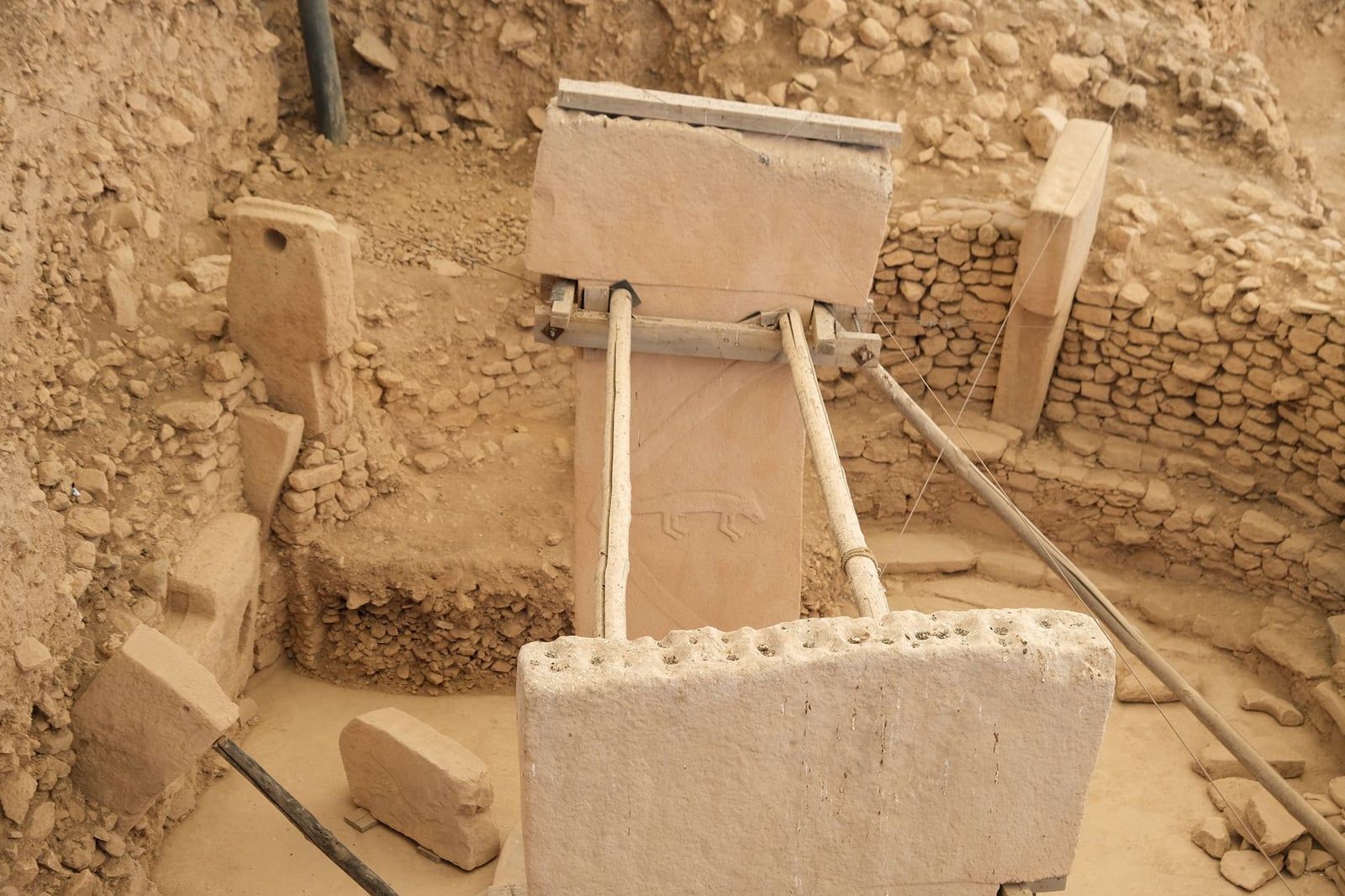
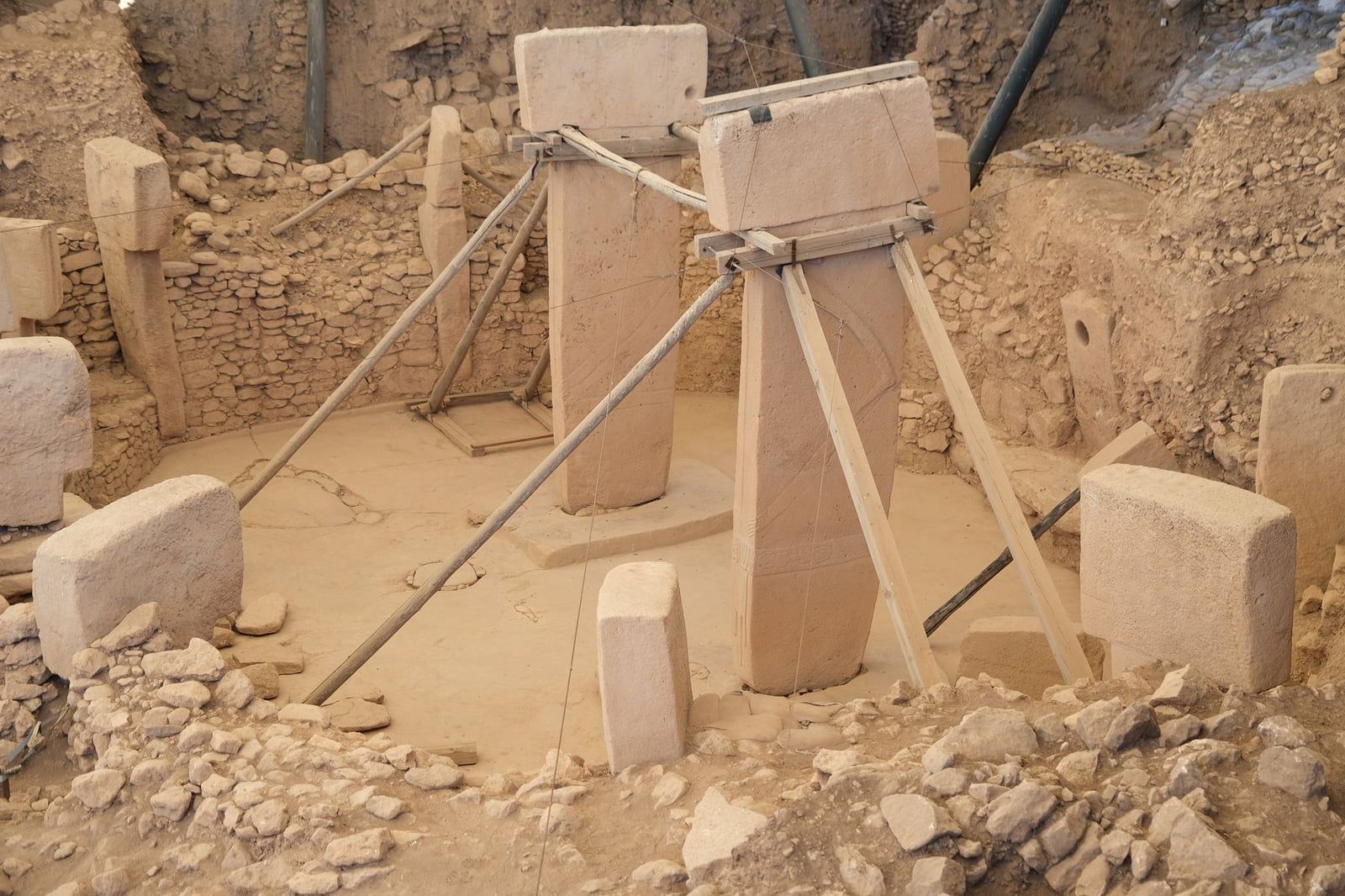
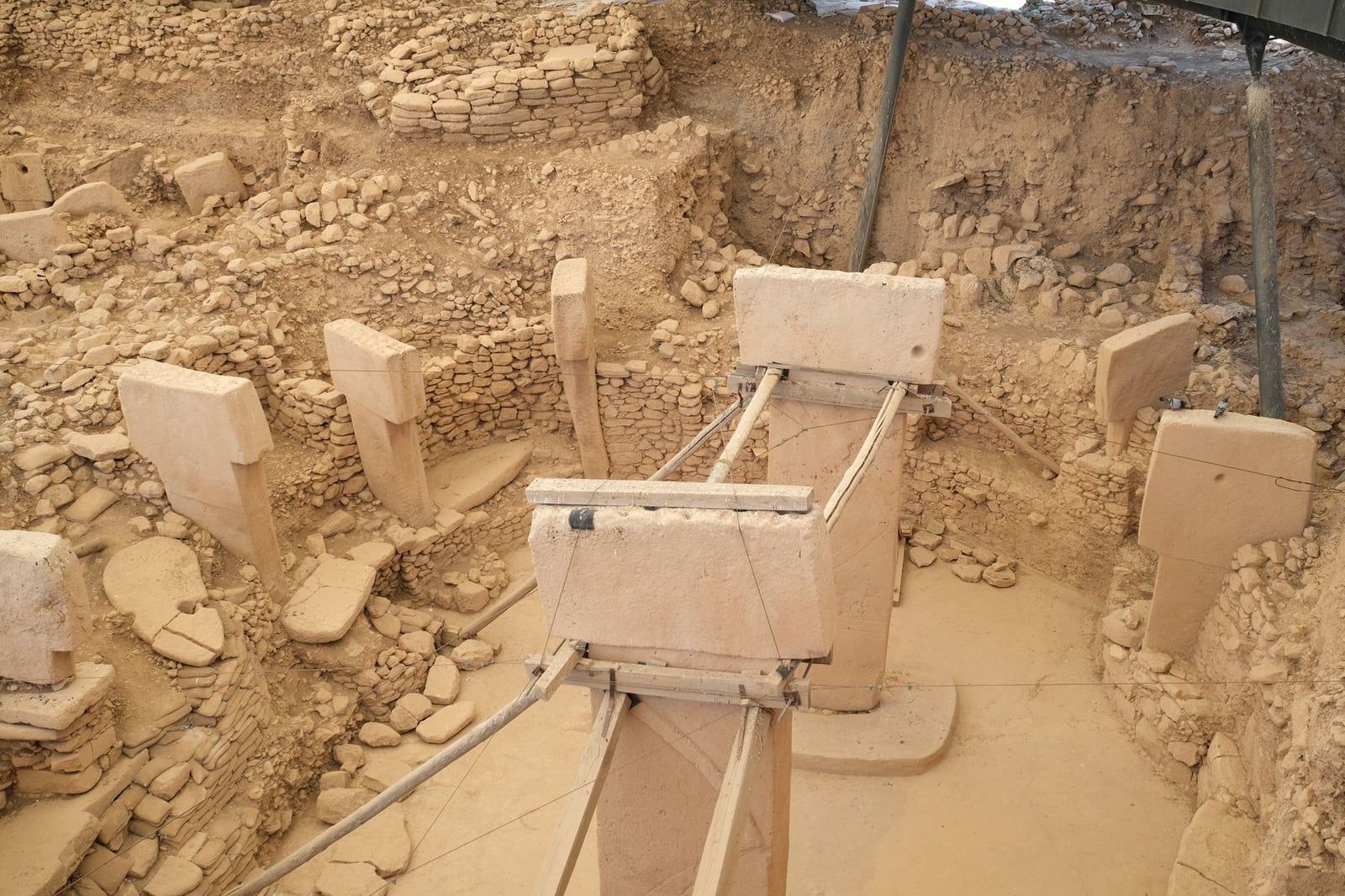
The strangest carvings at Göbekli Tepe are the ones most visitors don't notice: the pillars themselves are bodies. Look at the shafts of the larger T-shaped stones and you'll find arms carved in low relief, wrapping around from the sides, ending in long, thin hands that meet — or nearly meet — over the pillar's belly. A few pillars wear loincloths, complete with belt. The horizontal slab at the top reads as shoulders.
Klaus Schmidt, the site's first excavator, concluded that the T-pillars represent stylized human figures, deliberately headless. Seen in profile, the shape clicks: a body seen from the side, shoulders squared, no face. Which bodies is the open question. Stylized ancestors, generic humans, or deities all have their defenders — some researchers argue the faceless pillars could be humanity's earliest abstract depictions of gods. Nobody can rule the alternatives out, and after twelve millennia nobody may be able to.
The animal reliefs that crowd these bodies complicate the reading. One common interpretation treats the animals as guardians of the sacred space, carved onto the pillar-persons as protection or company. The central obelisks are giants of the work — up to about 6 m long and 40 tons — so a carved arm wrapping one of them covers ground you can see from ten paces away. The relief itself is shallow. Get closer than the boardwalk allows and you'll understand why the museum replicas matter.
The Vulture Stone: Pillar 43 Up Close
Pillar 43 is the most famous carved stone of its age — a T-pillar about 3.5 m tall in Enclosure D, its western broad side filled edge to edge with the densest scene on the site. The excavators' own description gives the inventory. A big vulture dominates, left wing lifted, right wing pointed at a sphere or disc. To the vulture's right stands an ibis or young vulture. Above them run a snake, two H-shaped symbols, and wild fowl; below, along the shaft, a huge scorpion and the head and neck of yet another bird.
The human comes next, and he is the hook. Male, phallus erect, head absent. Running along the bottom of the stone — actually the uppermost row as you read it — three rectangular shapes with cupola-like arches each carry an animal on top: a bird that may be a stork or crane, a leaping predator, and a reptile. The excavators suggest these arched forms could be schematic depictions of the enclosures themselves, each topped with its emblematic animal. If so, Pillar 43 is a map of the site drawn by the people who built it.
What does it all mean? The funerary reading is the most grounded: the headless man fits Early Neolithic death-cult practices, and the sphere above the vulture's wing could even be his severed head. On that reading the vulture is doing what vultures do — stripping the dead, perhaps in a sky burial — and the scene documents an excarnation rite. A second reading sees the wing as a protective gesture over a sphere that is an egg, a sun, or a moon disc. A third, published as a comparative study, reads the whole stone as a two-level cosmos: birds, arches, the circle, and H-signs in an upper sky register; scorpion, snake, waterfowl, and the headless human below in an earthly one.
There are shamanic readings too, taking the bird-human mix as therianthropic — beings part animal, part person. The honest position: the scene is clearly composed, not random, and clearly cannot yet be read. The composition argues for a story the carvers knew by heart. The missing piece is their dictionary.
The "World's Oldest Calendar" Claim — and the Pushback
You may have seen the headline: Göbekli Tepe holds the world's oldest calendar, carved 12,000 years before Stonehenge. Here is what the research actually says, and what the site's own excavators say back.
The astronomy story started in 2017, when Martin Sweatman and Dimitrios Tsikritsis proposed that Pillar 43 encodes a "date stamp" of about 10,950 BCE, tied to the heavily debated Younger Dryas impact hypothesis — a comet fragment striking the earth around 10,850 BCE. They read the vulture and its neighbors as constellations, the whole stone as a star map memorializing a catastrophe.
In 2024, Sweatman — now at the University of Edinburgh — pushed the thesis further in the journal Time and Mind (published online July 24, 2024). Each V-shaped symbol, the paper argues, represents one day. Count the V-marks across the carvings and you get a solar calendar of 365 days: 12 lunar months plus 11 extra days, with the summer solstice marked as a special V worn around the neck of a bird-like beast. The same study claims the carvings record the comet strike of ~10,850 BCE, picture the Taurid meteor stream — lasting 27 days — on another pillar, and track the precession of the equinoxes at least 10,000 years before Hipparchus documented it in 150 BCE.
The excavators' answer is blunt. Researchers with the German Archaeological Institute published a formal response — "More than a vulture: A response to Sweatman and Tsikritsis" — rejecting the astronomical reading of Pillar 43. Their structural objection: the enclosures were rebuilt and modified over time and were possibly roofed, which undercuts the idea of open-air sky observatories. Their methodological one: fixating on a single pillar strips the imagery of its archaeological context — the emblematic animals, the enclosure-by-enclosure system, the funerary evidence around it. Mainstream archaeology sides mostly with them; the funerary and cosmological readings are considered far better grounded in the excavated record than any star map.
What is genuinely agreed: Neolithic people watched the sky, and a 365-day calendar is the kind of thing sky-watchers invent. What is not agreed: that specific pillars encode specific celestial events. When a guide or a video states the calendar as fact, you now know which half is claim and which half is consensus.
What the Carvings Might Mean: Guardians, Emblems, and Open Questions
Zoom out from Pillar 43 and a set of broader interpretations emerges, none of them proven but all of them anchored in real evidence.
Guardians is the simplest: the animal reliefs protect the sacred space, and the carved bodies of the T-pillars — human, ancestral, or divine — host them. The emblematic-animal pattern sharpens this into something like group identity. If each enclosure's dominant species marks the people who built it, the carvings are badges of affiliation, not name tags for individuals. Schmidt himself connected the vultures and the stripped-bone imagery to sky burial and funerary ritual, an idea that fits the wider Pre-Pottery Neolithic concern with taking bodies apart and putting them back together.
The bones back that up. In 2017, fragments of human crania with deep incisions came out of the site — interpreted as part of the Neolithic skull cult documented across the region. People were handling the dead's heads, deliberately, at the same sanctuary where a pillar shows a headless man and another figure cradles a human head. That is a lot of converging evidence for death ritual, and it is why the funerary reading of the carvings carries more weight than the astronomical one.
Is any of it writing? No. There is no evidence the H-shapes, crescents, or V-marks encode sounds or words. But they form a structured, intentional symbolic system — placed in deliberate, visible positions, repeated across pillars, consistent in form. Recognizable, not yet readable. Twelve thousand years, no Rosetta Stone, no surviving cultural key: that distance is the honest explanation for why interpretation stalls, and any guide who claims a definitive translation of the symbols is selling you something.
How to See the Carvings Today: The Site Boardwalk and the Şanlıurfa Museum
Yes, you can see the carvings — with two caveats about distance and angle. Here is exactly how.
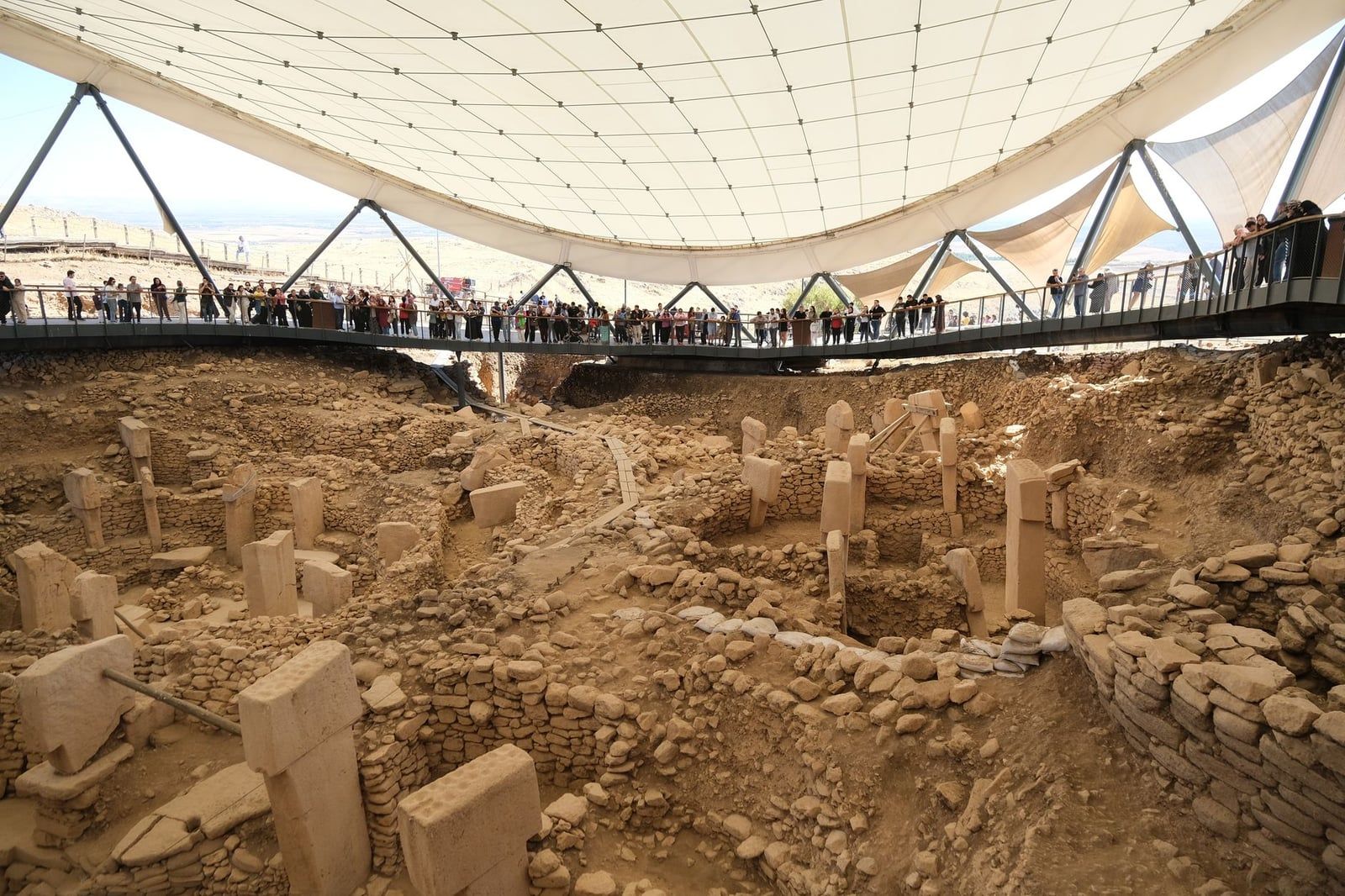
At the site, you buy tickets at the visitor center and follow a walking route through excavation zones A to D, all of it under a wide protective membrane roof completed in 2017 to shield the fragile limestone. The enclosures are viewed from an elevated boardwalk, which keeps you above the stones but at arm's length from the detail. Pillar 43's famous face points the wrong way for full viewing: some reliefs to the left of the scorpion and the bird sit behind Enclosure D's perimeter wall and are simply not visible from the walkway. Study the scene before you go, and you'll recognize fragments fast.
That is the argument for the museum-first strategy. The Şanlıurfa Archaeology Museum — opened in 2015, 29,000 m² across 14 halls — displays original Göbekli Tepe pillar fragments at eye level, a full-scale replica of the enclosure viewed from a glass platform, and, per specialist guides, a detailed replica of the Vulture Stone you can stand centimeters from. See those first, then the boardwalk scenes snap into focus. The museum also holds the sculptural bookend to the pillar reliefs: Urfa Man, an 11,000-year-old, 1.80 m statue with obsidian eyes, considered the world's earliest known life-sized human statue. One day, one bus ride, the whole carved story.
Light and season decide how much you read. Low relief carved 11,500 years ago shows best in early-morning or late-day slanting light, and Şanlıurfa summers are brutal by midday — go at opening in hot months, or visit in the cooler half of the year when the low sun works in your favor. A guided walk helps most here; compare the options on our Göbekli Tepe walking tours page, or book a private tour with a specialist guide if you want Pillar 43 narrated motif by motif. You'll find the rest of the options on our full Göbekli Tepe tours page.
Logistics, in short:
- Entry for foreign visitors: €20
- Hours: 08:30–19:00 summer (April 1–October 31), 08:30–17:30 winter
- Ticket offices close 30 minutes before closing time
- BELSAN 100 municipal bus runs from Şanlıurfa, about a 30-minute drive
- Aim for opening time in summer; shadows help the reliefs
Full opening hours and entry fees are on our hours and fees page, and transport options — bus routes and driving times — on our directions to Göbekli Tepe page. If you're still weighing whether the trip works for you, our guide on whether you can visit Göbekli Tepe covers the practicalities end to end.
Frequently asked questions
What animals are carved at Göbekli Tepe?
Serpents, foxes, and boars dominate the reliefs, but the full inventory includes lions, bulls, gazelle, mouflon, onager, ducks, cranes, vultures, scorpions, spiders, and other insects and arachnids. Wherever an animal can be identified, it is depicted as male.
What do the carvings and symbols at Göbekli Tepe mean?
There is no consensus. Animal reliefs are read as guardians of a sacred space, the T-pillars as stylized humans, ancestors, or deities, and the abstract signs as an undeciphered but structured symbolic system. Calendar and star-map readings exist but are contested by the excavators.
Where is the Vulture Stone, and can visitors see it?
Pillar 43 stands in Enclosure D, its famous scene carved on the western broad side. You view it from the elevated boardwalk, and some reliefs sit hidden behind the enclosure's perimeter wall. The Şanlıurfa Archaeology Museum shows original pillar fragments and, per specialist guides, a detailed Vulture Stone replica.
Did the Göbekli Tepe carvings record the world's oldest calendar?
A 2024 University of Edinburgh study (Martin Sweatman, in Time and Mind) reads the V-marks as days forming a 365-day lunisolar calendar with a solstice marker, and links the carvings to a comet strike around 10,850 BCE. The site's excavators published a formal rebuttal to the underlying star-map thesis, so treat the calendar as a contested claim, not established fact.
Is there writing at Göbekli Tepe?
No. There is no evidence the signs encode sounds or words. They form a structured, intentional symbolic system — recognizable but not readable — which is a different thing from a script.
How old are the Göbekli Tepe carvings?
Radiocarbon chronology puts the site's use at roughly 9500–8000 BCE, so the earliest carvings are about 11,500 years old. Enclosure D, which holds the Vulture Stone, produced the site's oldest measured date, 9530 BCE.
What are the visiting hours and entrance fee for Göbekli Tepe?
Foreign visitors pay €20. The site opens 08:30–19:00 in summer (April 1–October 31) and 08:30–17:30 in winter, with ticket offices closing 30 minutes before. Early-morning visits are best in hot months.